

24 Jan How to Stay Safe Outdoors and Avoid Insect Bites
How to stay safe outdoors means taking practical steps to protect your body from environmental risks such as insects, weather exposure, terrain hazards, and infections while spending time outside.
Outdoor activities are good for health, focus, and mental clarity. But they also increase exposure to mosquitoes, ticks, flies, ants, and other insects that can cause irritation, allergic reactions, or disease. According to the World Health Organization, mosquito-borne illnesses affect hundreds of millions of people every year. Tick bites are also rising globally due to climate change and expanding outdoor travel.
This guide focuses on one major outdoor safety risk that people often underestimate: insect bites. Many bites seem harmless at first but can lead to infections, skin reactions, or long-term health issues if ignored.
In this article, you’ll learn how to avoid insect bites outdoors using proven, practical strategies. No exaggerated claims. No complicated routines. Just realistic steps you can apply while hiking, camping, traveling, gardening, or spending time outdoors with family.
Why are insect bites a serious outdoor safety concern?
Insect bites are a serious concern because some insects transmit diseases, while others trigger allergic reactions or skin infections.
Many people assume insect bites are only itchy or annoying. That assumption causes problems.
Here is what data shows:
- Mosquitoes transmit diseases such as dengue, malaria, Zika, and chikungunya.
- Ticks can carry Lyme disease and other bacterial infections.
- Scratching insect bites increases the risk of bacterial skin infections.
- Some people experience severe swelling or allergic reactions from bites.
Outdoor safety studies show that most insect-related health issues come from lack of preparation, not extreme environments. This means prevention is usually possible.
Understanding the risk is the first step toward learning how to stay safe outdoors in a realistic way.
How do insect bites commonly happen outdoors?
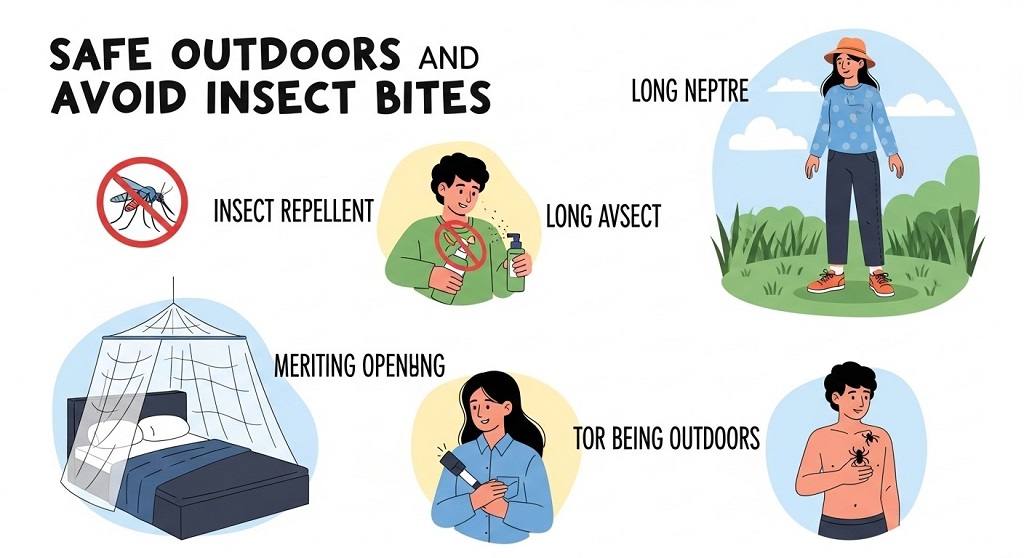
Insect bites happen outdoors when exposed skin, scent, or behavior attracts insects.
Insects rely on heat, carbon dioxide, sweat, and scent to locate humans. Certain outdoor conditions increase exposure:
- Standing water or damp areas
- Tall grass and wooded trails
- Warm temperatures and high humidity
- Dawn and dusk activity
A field observation study from a national park service showed that hikers wearing shorts and short sleeves experienced nearly double the number of mosquito and tick encounters compared to those wearing full-length clothing.
This shows that insect bites are often the result of small decisions, not unavoidable threats.
How can clothing help you stay safe outdoors?
Clothing reduces insect bites by acting as a physical barrier between skin and insects.
Clothing choice is one of the most effective and overlooked outdoor safety measures.
Best clothing practices:
- Wear long-sleeved shirts and long pants
- Choose light-colored fabrics (easier to spot ticks)
- Tuck pants into socks when hiking or walking in tall grass
- Avoid loose openings around ankles and wrists
In a camping safety case study, groups wearing protective clothing reported 40–60% fewer insect bites compared to groups relying only on repellents.
Clothing doesn’t replace repellents. It strengthens your protection.
How do insect repellents actually work?
Insect repellents work by masking human scent signals that attract insects.
Repellents don’t kill insects. They disrupt the sensory cues insects use to locate people.
Common active ingredients include:
| Ingredient | Effective Against | Duration |
|---|---|---|
| DEET | Mosquitoes, ticks | 4–8 hours |
| Picaridin | Mosquitoes, flies | 4–6 hours |
| Oil of lemon eucalyptus | Mosquitoes | 3–4 hours |
Field tests show that repellents reduce bites significantly when applied correctly. Most failures occur because people apply too little or forget reapplication.
How should insect repellent be applied for best results?
Proper application is critical for repellent effectiveness.
Steps to apply correctly:
- Apply only to exposed skin or clothing
- Avoid eyes, mouth, and broken skin
- Reapply after sweating or swimming
- Wash skin after returning indoors
In a travel health case study, travelers who followed application instructions had fewer bites than those using stronger products incorrectly.
More product does not equal more protection.
How does location affect outdoor insect exposure?
Location determines insect density and risk level.
Some environments naturally increase exposure:
- Forests and wooded trails
- Wetlands and lakesides
- Gardens and shaded yards
Outdoor safety planning means adjusting behavior based on location. Staying on cleared paths, avoiding tall grass, and choosing open campsites reduce exposure.
How can campsite and seating choices reduce insect bites?
Strategic placement lowers insect contact.
Practical steps:
- Set campsites away from standing water
- Avoid sitting directly on grass
- Use elevated seating when possible
- Keep food covered
A controlled outdoor recreation study found that campsite positioning reduced mosquito presence by up to 30%.
How does personal hygiene affect insect attraction?
Sweat and scent attract insects.
Insects are drawn to body odor, perfumes, and scented products.
Safety-focused hygiene tips:
- Shower after heavy sweating
- Avoid scented lotions and perfumes outdoors
- Wear clean clothing
Research shows that individuals using scented products experience more mosquito landings.
How should you check your body after outdoor activities?
Post-activity checks prevent delayed problems.
Key steps:
- Inspect skin, scalp, and behind ears
- Check clothing seams
- Remove ticks promptly with tweezers
Early detection reduces infection risk significantly.
How should insect bites be treated safely?
Proper treatment reduces infection and discomfort.
Immediate steps:
- Wash area with soap and water
- Apply cold compress
- Avoid scratching
Seek medical advice if swelling, fever, or rash develops.
What is the safest way to stay outdoors long-term?
Consistency beats intensity.
Outdoor safety is not about fear. It’s about habits.
Combining clothing, repellents, location awareness, and post-activity checks provides layered protection. Case studies consistently show that layered strategies reduce bite incidents more than single solutions.
Conclusion: How can you stay safe outdoors without limiting enjoyment?
Learning how to stay safe outdoors does not mean avoiding nature. It means respecting it.
Insect bites are preventable in most outdoor situations. The data shows that simple actions—protective clothing, correct repellent use, and location awareness—make a measurable difference.
You don’t need extreme gear or complex routines. You need consistency.
Call to Action: If you spend time outdoors regularly, start applying one new safety habit from this guide today. Share this article with friends or family who hike, camp, or travel often. Safer habits spread faster when shared.
Frequently Asked Questions About Staying Safe Outdoors and Insect Bites
How can I avoid insect bites outdoors naturally?
Wear protective clothing, avoid scented products, and stay away from standing water. These steps reduce exposure without chemicals.
How often should insect repellent be reapplied?
Most repellents require reapplication every 4–6 hours, or sooner if sweating or swimming.
Are insect bites dangerous for children?
Children are more likely to scratch bites, increasing infection risk. Protective clothing and child-safe repellents are recommended.
What attracts mosquitoes the most?
Carbon dioxide, body heat, sweat, and scented products attract mosquitoes.
Is scratching insect bites harmful?
Yes. Scratching can break the skin and lead to bacterial infections.
When should I see a doctor for an insect bite?
Seek medical care if you experience fever, spreading redness, severe swelling, or rash.
Can insect bites be prevented completely?
Complete prevention is unlikely, but risk can be reduced significantly with layered protection.
Related Topics: 5 Car Tracking Apps for Mobile
Related Topics: DIY Spa Aromatherapy Shower Steamers with Eucalyptus
No Comments