
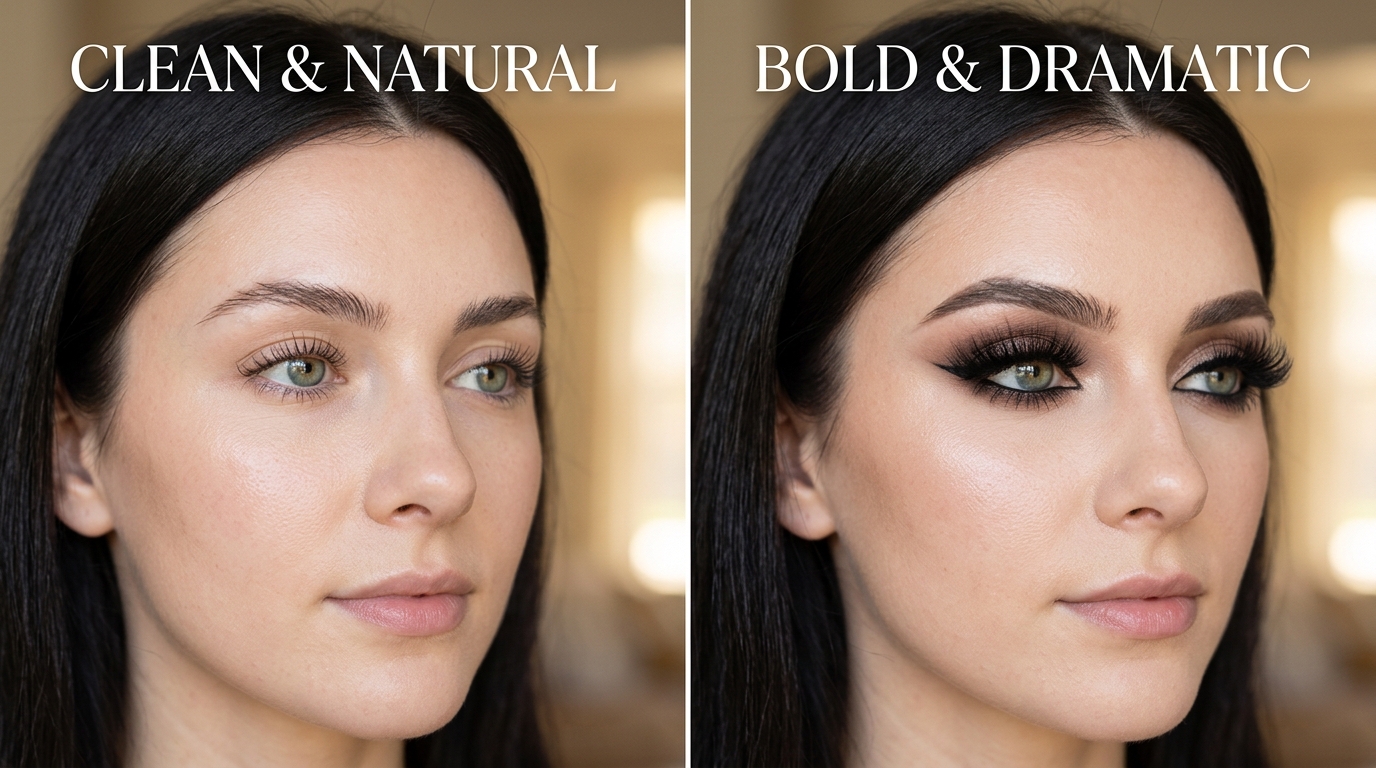
25 Sep Natural vs. Dramatic Eye Makeup: Understanding Different Lash Styles
Standing in front of the mirror with a mascara wand in hand, the difference between a polished everyday look and a full glam transformation often comes down to one thing: the lashes. The same eye makeup can read completely differently depending on whether the lashes are separated and feathery or dense and bold. Choosing the wrong lash style for an occasion can leave you feeling overdone at brunch or underdressed at a wedding. To find out more about how lash length, volume, and curl interact with different mascara formulas, it helps to first understand what actually separates a natural lash look from a dramatic one — and how to choose the right one for your features, your eye shape, and the moment.
Quick Answer
Natural lash styles focus on separation, subtle length, and a soft curl, usually achieved with lengthening or clear mascaras and light coats. Dramatic lash styles emphasize volume, density, and lift, often using volumizing or fiber-based mascaras, multiple coats, or false lashes. The right choice depends on your eye shape, the occasion, and how much definition you want without overwhelming your features.
Key Takeaways
- Natural and dramatic lash styles differ mainly in volume, density, and curl intensity — not just length.
- Eye shape determines how much lash volume you can wear before the eyes start to look heavy or closed.
- Mascara formula and wand shape matter as much as application technique when building either look.
- Dramatic lashes are not automatically better for special occasions; the occasion and lighting matter.
- Combining a natural lash look with bold eyeliner, or vice versa, often creates the most balanced result.
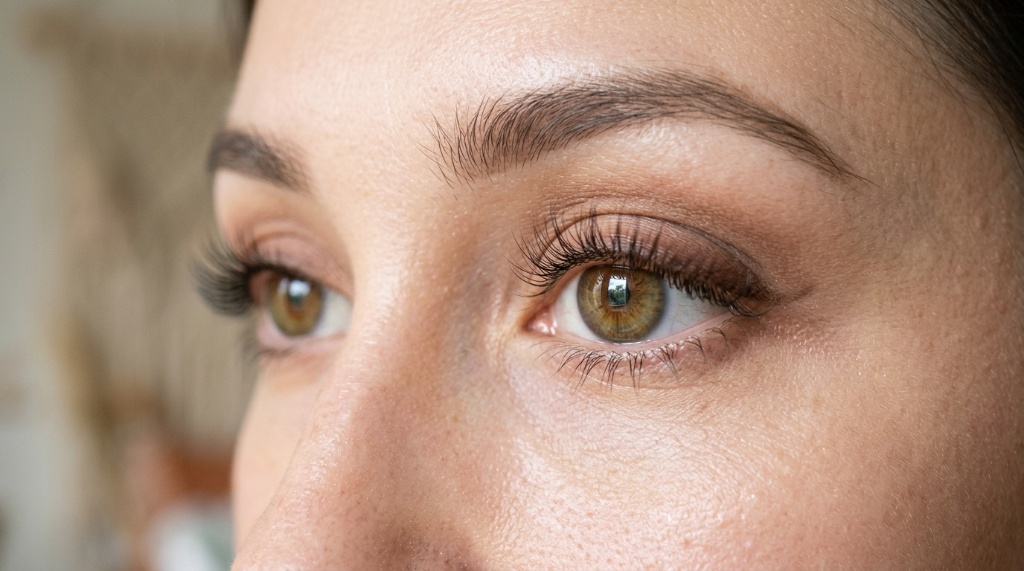
What Actually Defines a Natural Lash Style?
A natural lash style is defined by visible separation between individual lashes, a slight lift at the root, and length that extends just past the natural lash line. It is not about making lashes invisible — it is about making them look like a better version of what already exists.
Natural lash looks typically rely on:
- Lengthening or defining mascara formulas rather than heavy volumizing ones
- Thin, tapered wands that reach the root and separate lashes without clumping
- One to two light coats, applied with a wiggle-and-sweep motion from root to tip
- Minimal or no lower lash emphasis, unless the goal is a soft daytime frame
The biggest mistake people make with natural lash looks is overloading the wand. Two thin coats applied to separated lashes almost always look better than one thick, clumpy coat. If clumps form, a clean spoolie brushed through the lashes immediately after application can restore separation before the formula dries.
Who Should Choose a Natural Lash Style?
Natural lash styles work especially well for hooded, monolid, or downturned eye shapes, where heavy volume can visually weigh down the eye area. They are also the safer choice for daytime settings, job interviews, and any environment with harsh overhead lighting, which tends to exaggerate clumps and flaking.
What Makes a Lash Look Dramatic?
A dramatic lash look is built on density and lift. The goal is to make the lash line read as a stronger frame around the eye, often blurring the line between mascara and eyeliner. Volume, not just length, is the key factor.
Dramatic lash styles usually involve:
- Volumizing, fiber, or curl-focused mascara formulas, sometimes layered
- Fuller, denser wands, or curved wands designed to push lashes upward
- Two to four coats, sometimes with a primer underneath to hold curl
- Optional false lashes, lash extensions, or individual cluster lashes for maximum impact
The trade-off with dramatic lashes is weight. Multiple coats of heavy formula can cause lashes to droop, especially on straight or downward-growing lashes. A waterproof or curl-hold formula at the base helps anchor the lift before heavier layers are added.
Who Should Choose a Dramatic Lash Style?
Dramatic lashes suit almond and round eye shapes particularly well because the extra volume does not overwhelm the visible lid space. They are also common for evening events, photography, stage performances, and any situation where the eyes need to hold their own against bold lipstick or contouring.
Natural vs. Dramatic Lashes: A Side-by-Side Comparison
The table below summarizes how the two styles differ across the factors that matter most when choosing a look.
| Factor | Natural Lash Style | Dramatic Lash Style |
|---|---|---|
| Primary goal | Definition and separation | Volume and intensity |
| Typical mascara type | Lengthening, defining, or clear | Volumizing, fiber, or curl |
| Number of coats | One to two light coats | Two to four coats, often layered |
| Wand preference | Thin, tapered, or comb-style | Full, dense, or curved |
| Best eye shapes | Hooded, monolid, downturned | Almond, round, deep-set |
| Best occasions | Daytime, work, casual | Evening, events, photography |
| Common risk | Looking undone if under-applied | Clumping, drooping, or flaking |
Notice that neither style is inherently superior — they solve different problems. A natural look solves the problem of definition without weight, while a dramatic look solves the problem of visibility and impact under strong lighting or long wear.
How Eye Shape Changes the Right Choice
Eye shape is the single most underrated factor in lash style selection. Two people can use the same mascara and number of coats and end up with completely different results simply because of how much visible lid space they have.
Hooded and Monolid Eyes
Heavy volume can disappear into the fold of a hooded lid or push the eye downward on a monolid. For these shapes, curl and lift outperform density. A curl-hold formula applied at the root, followed by a light second coat at the tips, creates an open-eyed effect without adding bulk that will smudge against the brow bone, Before choosing your lash style, make sure you know what is the first rule of makeup?
Almond and Round Eyes
These shapes handle dramatic lashes well because there is enough visible lid space to balance the added volume. A volumizing mascara applied in two to three coats, with extra attention to the outer corner, creates a lifted, wide-awake effect.
Downturned Eyes
Downturned eyes benefit from concentration at the outer third of the lash line. Applying more product to the outer lashes, and keeping the inner lashes lighter, creates a subtle lift that counteracts the natural downward angle. Going full dramatic across the entire lash line tends to emphasize the droop rather than correct it.
Common Lash Style Mistakes and How to Avoid Them
Most lash problems come from application habits rather than product quality. These are the mistakes that show up most often:
- Pumping the wand into the tube. This pushes air into the formula and causes clumping and flaking. Instead, twist the wand gently to load it.
- Applying to dry lashes with old formula. Mascara older than about three months tends to flake and clump. Replace it on schedule.
- Skipping the root. Placing product at the base of the lashes, not just the tips, is what creates lift and the illusion of a fuller lash line.
- Over-coating the lower lashes. Heavy lower lashes can drag the eye downward. A single light pass, or none at all, often looks cleaner.
- Mixing incompatible formulas. Layering a lengthening formula over a volumizing one can cause flaking. Stick to one formula or use a dedicated primer.
Choosing a Lash Style by Occasion
The right lash style is situational. A look that works beautifully for a nighttime event can feel excessive at a morning meeting, and a subtle daytime look can disappear entirely under event lighting.
- Work and daytime: Natural lash style, one to two coats, minimal lower lash product.
- Casual outings: Natural-to-medium, with a slight emphasis at the outer corner.
- Evening events: Dramatic volume, two to three coats, optional cluster lashes.
- Photography and stage: Maximum volume and curl, since cameras and bright lights flatten lash definition.
- Weddings and formal events: Balanced approach — dramatic enough to hold up in photos, controlled enough to look elegant in person.
A useful rule: if the rest of the makeup is bold, keep the lashes slightly more restrained, and if the rest of the makeup is minimal, the lashes can carry more weight. Balance, not maximum intensity, is what makes either style look intentional.
Frequently Asked Questions
Can I get a dramatic lash look without false lashes?
Yes. Layering a volumizing mascara with a curl-hold primer and applying two to three coats, concentrating on the root and outer corner, creates significant volume without falsies. The result is softer than false lashes but noticeably more dramatic than a natural look.
Does a natural lash look work for a formal event?
It can, especially if the rest of the makeup is bold or the event is daytime. However, under strong event lighting or in flash photography, natural lashes often read as barely there. A light boost of volume at the outer corner is usually a safer choice for formal photos.
How many coats of mascara is too many?
For most formulas, three coats is the practical limit before lashes begin to clump or droop. If more volume is needed beyond that, switching to a fiber formula, a primer, or adding individual cluster lashes produces better results than adding more coats.
Why do dramatic lashes sometimes make eyes look smaller?
Heavy volume, especially on hooded or downturned eyes, can weigh the lash line down and cover visible lid space. In those cases, curl and lift create a more open effect than density alone.
Should I match my lash style to my eyeliner?
Not always. Bold eyeliner paired with heavy dramatic lashes can look overdone, while a natural lash with a sharp winged liner often creates a cleaner, more balanced result. If one element is bold, the other usually works better slightly restrained.
Do lash styles need to change with the seasons?
Humidity and heat affect how mascara wears. In warmer months, waterproof or smudge-resistant formulas help both natural and dramatic looks hold up, while colder months typically allow heavier formulas to perform without running.
Conclusion
Natural and dramatic lash styles are not competing options — they are tools for different outcomes. Natural lashes define and separate without adding weight, making them ideal for daytime, hooded eyes, and minimal makeup. Dramatic lashes build volume and lift for evening events, photography, and moments when the eyes need to command attention. The most reliable approach is to start with your eye shape, match the lash style to the occasion, and adjust the number of coats and formula rather than defaulting to maximum volume every time. Small, deliberate choices produce the most polished result.
No Comments