
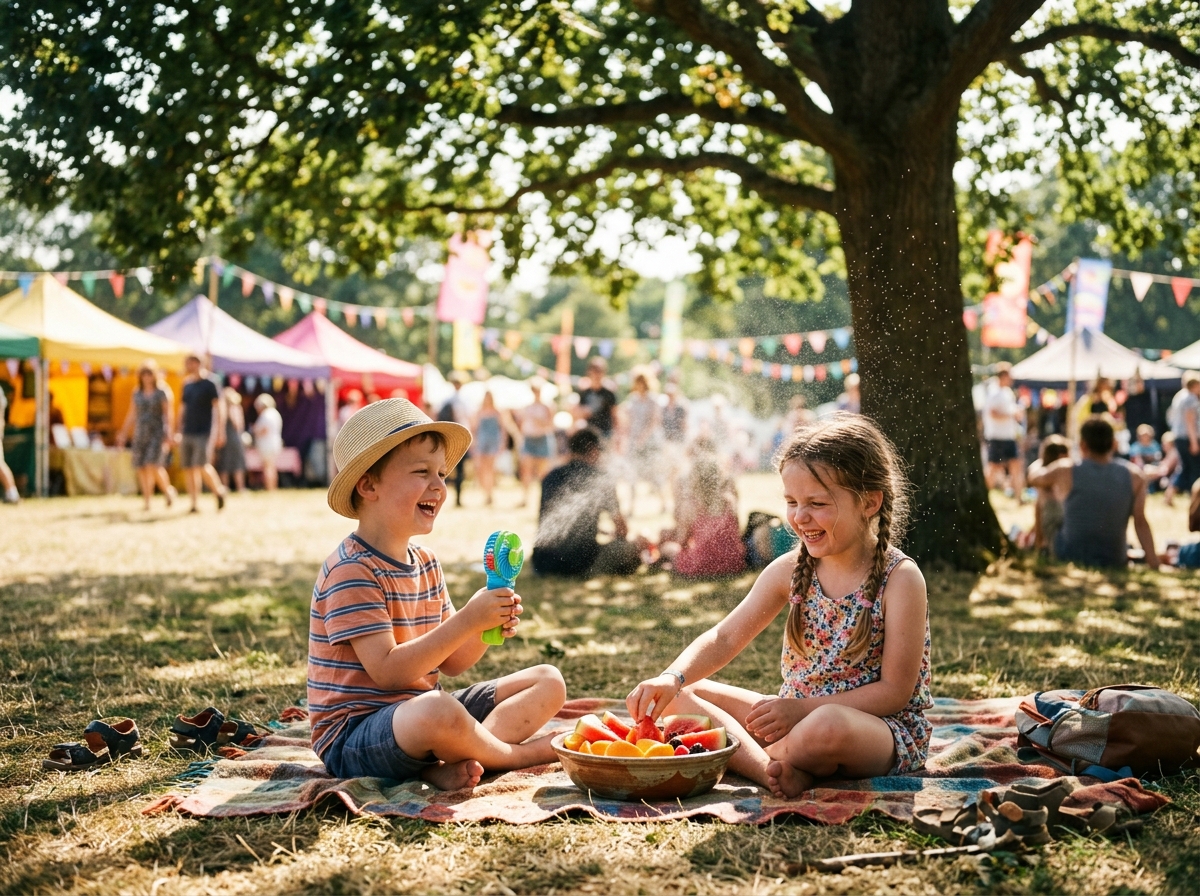
07 Oct How to Keep Kids Entertained (and Cool) at Large Outdoor Events
Anyone who has spent a long, sunny afternoon at a crowded festival or fair knows the moment well: the kids are hot, the lines are long, and the fun starts to fade fast. Large outdoor events can be thrilling for children, yet heat, fatigue, and overstimulation often turn a great day into a meltdown if you are not prepared. This is especially relevant for families planning around major attractions, which is why many parents first ask when is the state fair in Arizona so they can match their outing to cooler weather and plan accordingly.
Quick Answer
Keep kids entertained and cool at large outdoor events by planning around peak heat hours, bringing shade and hydration, packing a small activity kit, building in frequent rest breaks, and choosing kid-focused attractions during the hottest part of the day. A simple rotation of water play, snack breaks, and shaded entertainment usually prevents both boredom and overheating better than any single gadget or purchase.
Key Takeaways
- Timing matters more than gear: arrive early or late, and treat the midday hours as rest-and-shade time.
- Hydration and shade prevent most heat-related meltdowns, so build breaks into the schedule instead of reacting to symptoms.
- A lightweight activity kit for lines and waiting areas keeps kids occupied with minimal effort.
- Dressing kids in light colors, hats, and wet-friendly clothing makes cooling easier throughout the day.
- Knowing the warning signs of heat exhaustion helps you decide when to leave rather than push through.
Plan Around the Heat, Not Just the Schedule
The single most effective way to keep kids cool is to avoid the worst heat entirely. At large outdoor events, temperatures often peak between late morning and mid-afternoon, and that is exactly when children get cranky. Instead of fighting the heat, structure your visit around it.
Many families arrive right when gates open, catch the most popular attractions while lines are short, then retreat to shade or an indoor area during the hottest stretch. You can return to the action in the late afternoon when temperatures drop and crowds thin out. If the event runs into the evening, evening hours are often the most comfortable and least stressful for younger kids.
Best Times to Visit
- Early morning: cooler air, shorter lines, less stimulation.
- Late afternoon to evening: lower temperatures, better moods, often better lighting for photos.
- Midday: best used for shaded rest, indoor exhibits, or water-based attractions.
If you cannot avoid midday, treat it as a recovery window rather than a peak activity window.
Build a Simple Cooling Kit
You do not need expensive equipment. A small, focused set of items covers most situations and fits in a single bag.
- Insulated water bottles for each child, refilled whenever possible.
- Wide-brimmed hats and light, breathable clothing.
- Cooling towels or a spray bottle for quick relief.
- Sunscreen and lip balm with SPF.
- A pop-up shade tent or umbrella stroller with a canopy for younger kids.
- Electrolyte drinks or freezer pops for hot afternoons.
What to Skip
Heavy blankets, thick strollers, and bulky toys create more heat and hassle. Choose lightweight gear that lets air circulate and dries quickly if it gets wet.
Keep Kids Entertained in Lines and Waiting Areas
Boredom often hits hardest in lines, not between attractions. The trick is to bring compact, reusable activities that do not require a table or batteries.
- A small notebook and crayons for drawing challenges like “design your own ride.”
- I-spy and scavenger hunt games based on what is visible around you.
- Card games or travel-sized puzzles.
- A deck of trivia questions about animals, food, or the event itself.
- Sticker books or temporary tattoos for younger children.
Rotating activities every 15 to 20 minutes keeps novelty high without adding weight to your bag.
Use Water and Shade as Entertainment
Cooling down and having fun do not need to be separate activities. Many large outdoor events include splash pads, misting stations, fountains, or water rides. Lean into these rather than avoiding them.
- Pack a quick-dry towel and a spare set of clothes for kids who get soaked.
- Let water play be the main event during the hottest hour.
- Use shaded seating and tree-lined areas as natural rest stops and snack stations.
When shade is limited, create your own with a lightweight umbrella or a stroller canopy, and rotate through shaded zones instead of staying in direct sun.
Watch for Heat Warning Signs
Even well-prepared families can run into trouble. Knowing the signs of heat exhaustion helps you act early.
- Complaints of headache, dizziness, or nausea.
- Flushed, clammy, or unusually pale skin.
- Irritability, confusion, or unusual tiredness.
- Stopped sweating in extreme heat.
If you notice these signs, move the child to shade, offer water, loosen clothing, and cool the skin with a damp cloth. If symptoms do not improve quickly, seek medical help. Never ignore a child who says they feel unwell in the heat.
Balance Activities to Prevent Overstimulation
Large events are loud, crowded, and visually intense. Even entertained kids can become overwhelmed. Alternate high-energy activities with calm ones.
- Follow a busy ride or show with a quiet snack break.
- Use quieter corners, indoor exhibits, or picnic areas as reset points.
- Keep a predictable routine: activity, break, activity, break.
This rhythm reduces meltdowns and makes the day last longer for everyone.
Adapt for Different Ages
A toddler and a ten-year-old need different strategies. Younger children benefit from shorter visits, stroller naps, and frequent feeding breaks. Older kids can handle longer stretches but may need more autonomy, such as letting them choose one or two activities per hour.
For mixed-age groups, split up occasionally so each child gets an age-appropriate experience, then reunite for shared meals and rest periods.
Frequently Asked Questions
What is the best time of day to take kids to an outdoor event?
Early morning or late afternoon and evening are usually best because temperatures are lower and crowds are often smaller. Midday is best reserved for shaded rest or water activities.
How much water should kids drink at a hot outdoor event?
Offer water every 15 to 20 minutes rather than waiting for thirst. Small, frequent sips work better than large amounts at once, and electrolyte drinks can help during extended heat exposure.
What should I pack to keep kids cool?
Pack insulated water bottles, hats, sunscreen, cooling towels, a spray bottle, light clothing, and a shade option like an umbrella or stroller canopy. A spare set of clothes helps after water play.
How do I keep kids entertained while waiting in long lines?
Bring compact activities such as a notebook, crayons, card games, and simple I-spy or trivia games. Rotate them every 15 to 20 minutes to keep interest high.
When should we leave an outdoor event because of heat?
Leave or move to a cool indoor space if a child shows signs of heat exhaustion, such as dizziness, nausea, confusion, or unusual tiredness, or if symptoms do not improve after cooling and hydration.
Are strollers a good idea at large outdoor events?
They can be helpful for younger children and for carrying supplies, but choose a lightweight model with a canopy. Be prepared for crowded areas where maneuvering is difficult.
Conclusion
Keeping kids entertained and cool at large outdoor events comes down to planning, not perfection. Time your visit around peak heat, bring a light cooling and activity kit, and build rest breaks into the day before anyone melts down. Water play, shade, and simple games handle most of the challenge, while awareness of heat warning signs keeps everyone safe. With a flexible plan and a few smart supplies, families can enjoy long outdoor days without the stress that usually comes with the heat.
No Comments