
23 Sep Car Reviews And Ratings: Complete Guide to Choosing Your Next Vehicle
Key Takeaways
- Car reviews combine expert testing with real owner feedback for balanced insight.
- Reliability ratings matter as much as performance scores for long-term satisfaction.
- Different sources weigh categories differently, so cross-checking multiple reviews helps.
- Safety ratings and crash test data deserve equal attention alongside driving impressions.
- Reading reviews correctly saves buyers from costly, regret-filled purchases.
Choosing a car without reading reviews is like booking a hotel without checking anyone’s experience. Car reviews translate technical specifications into practical, everyday insight. They tell you how a vehicle actually behaves, not just what a brochure promises. According to J.D. Power’s 2025 Vehicle Dependability Study, problems per 100 vehicles rose to 202 industry-wide, up from 190 the previous year. Industry analysts at Vehicletradeus.com/ warn that this trend alone makes careful research more important than ever.
This guide explains how car reviews and ratings work, what they measure, and how to use them wisely. Years ago, I nearly bought a hatchback based purely on styling. A single detailed review flagged a known transmission issue that saved me from a costly mistake. That experience changed how seriously I take review research now.
What Car Reviews Actually Measure
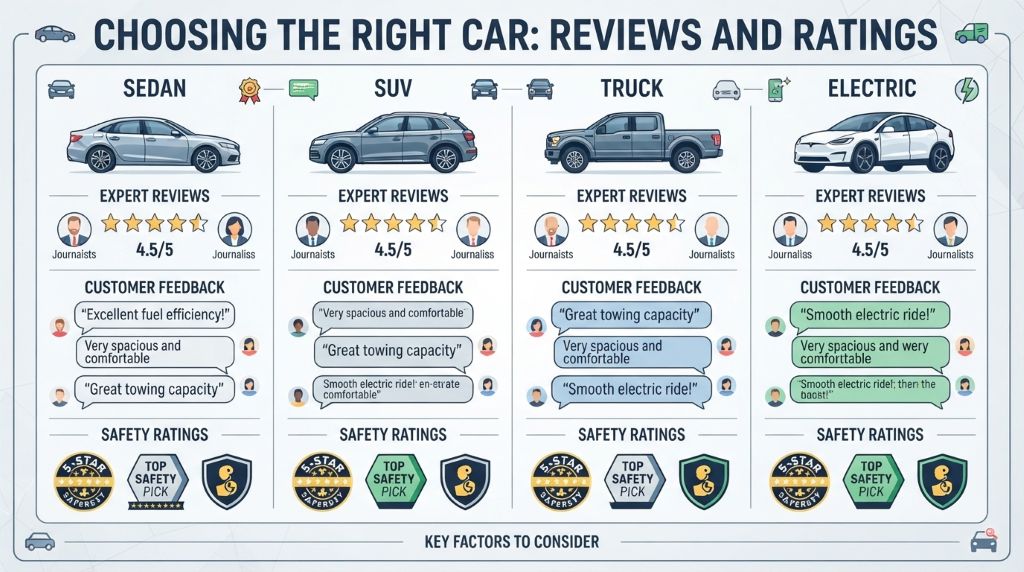
Car reviews aren’t just opinions about how a vehicle looks or feels. Professional outlets test dozens of specific categories before publishing conclusions. Understanding these categories helps readers interpret ratings correctly.
Most publications evaluate performance, comfort, technology, safety, and reliability separately. Performance covers acceleration, braking, and handling under controlled testing conditions. Comfort assesses seating, noise levels, and ride quality across different road surfaces.
Reliability ratings work differently from performance scores. Organizations like J.D. Power survey actual owners after three years of use. Their Vehicle Dependability Study covers 184 problem areas across nine major categories, including powertrain and infotainment. This method captures real-world durability, not just first-impression driving feel.
Consumer Reports takes a similar owner-survey approach, combined with independent lab and track testing. Their methodology blends subjective driving impressions with objective reliability data. Therefore, their ratings often reflect long-term ownership experience better than single test-drive reviews.
However, no single source captures everything perfectly. A vehicle might score well in acceleration testing but frustrate owners with software glitches years later. That’s exactly why infotainment connectivity issues, particularly Apple CarPlay and Android Auto problems, topped recent industry complaint data. Reading multiple review types together builds a fuller picture.
Video reviews add another useful layer, especially for gauging real-world visibility and ergonomics. Written reviews often miss small details a camera captures naturally. Combining formats gives buyers the most complete understanding possible.
Why Reliability Ratings Deserve Extra Attention
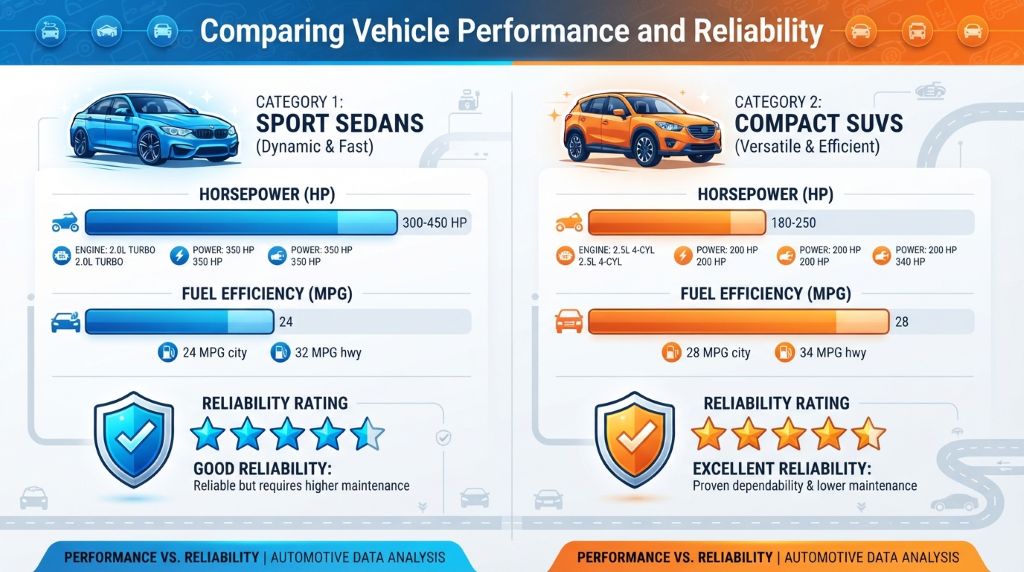
Performance numbers grab attention, but reliability ratings protect your wallet long-term. A fast, stylish car loses its appeal quickly if it spends more time in the shop than on the road.
J.D. Power’s dependability rankings reveal significant gaps between brands. Lexus led the 2025 study with just 140 problems per 100 vehicles, well below the industry average. Meanwhile, several European luxury brands scored considerably worse despite premium price tags.
This gap illustrates an important principle: price doesn’t guarantee dependability. Buyers often assume expensive vehicles automatically mean fewer problems. However, complexity often increases with luxury features, and complexity creates more potential failure points.
Reliability data also reveals patterns worth remembering. J.D. Power noted that plug-in hybrids and diesel vehicles generated the most complaints by vehicle type. Standard hybrids, interestingly, recorded the fewest problems overall. That detail matters for buyers weighing fuel-efficient options against long-term dependability.
Reading reliability sections carefully prevents falling for style over substance. A striking design means little if electrical gremlins appear within two years. Therefore, prioritize dependability data before falling in love with aesthetics or marketing claims.
Owner forums and third-party complaint databases add another verification layer. Cross-referencing professional ratings against real owner complaints often confirms or challenges published scores. This extra step takes time but prevents expensive surprises after purchase.
How to Compare Reviews from Different Sources
Not all car reviews weigh categories the same way, which creates confusing inconsistencies. Learning to compare sources properly turns confusion into clarity.
Start by identifying each publication’s testing methodology. Consumer Reports relies heavily on member surveys and independent purchases, avoiding manufacturer-loaned vehicles. This approach reduces potential bias compared to outlets using free press vehicles for testing.
Professional automotive publications often emphasize driving dynamics and performance more heavily. These sources suit buyers prioritizing handling, acceleration, or driving enjoyment. However, they sometimes underweight long-term reliability concerns compared to consumer-focused organizations.
When comparing multiple reviews, look for these patterns:
- Consistent complaints appearing across several independent sources.
- Specific model-year mentions, since issues often improve or worsen yearly.
- Owner survey sample sizes, since larger samples produce more reliable data.
- Category weighting differences between performance-focused and reliability-focused outlets.
Additionally, checking publication dates matters significantly. A five-year-old review might not reflect recent model updates or recalls. Manufacturers frequently address early issues through mid-cycle refreshes, changing a vehicle’s reliability profile entirely.
Cross-referencing sources takes extra effort, but the payoff justifies the time invested. A car that scores well across multiple independent reviews carries far more credibility than one praised by a single source alone.
Turning Reviews Into a Confident Purchase Decision
Reading car reviews only helps if you translate insights into practical action. Start by listing your top three priorities before searching, whether that’s safety, fuel economy, or cargo space.
Narrow your options using reliability data first, then layer in performance and comfort preferences. This order prevents falling for an exciting test-drive experience that hides underlying dependability concerns. Logic should guide excitement, not the other way around.
Visit multiple review sources for your shortlisted models before finalizing any decision. Look specifically for recurring complaints mentioned across several platforms. A single negative review might reflect one unlucky owner; repeated complaints suggest a genuine pattern.
Finally, schedule a test drive regardless of how thorough your research feels. Reviews provide valuable data, but personal comfort and driving feel remain deeply individual. What works perfectly for one driver might feel wrong for another entirely.
Final Thoughts
Car reviews and ratings exist to protect buyers from expensive, frustrating mistakes. Combining performance insight with reliability data creates a far more complete picture than either alone. My own near-miss with an unreliable hatchback proved how much a single detailed review can save. However, a thorough review should also consider hidden issues, which is why learning how to spot water damage before buying can help buyers identify costly problems before committing to a vehicle.
Take time comparing multiple sources before committing to any vehicle. Patterns across reviews reveal truth that marketing materials never will. Trust the data, then confirm it with your own test drive experience.
Share this guide with someone shopping for their next car, or leave a comment about a review that changed your decision. Real stories help other readers shop smarter.
Frequently Asked Questions
Are professional car reviews more reliable than owner reviews?
Both offer value; professional reviews test objectively, while owner reviews reveal long-term real-world experience.
How often should I trust a five-star safety rating alone?
Treat it as one factor, not the only one, alongside reliability and owner feedback.
Do reliability ratings change significantly between model years?
Yes, manufacturers often fix known issues, so check specific model-year reviews separately.
Should I prioritize performance or reliability when choosing a car?
Prioritize reliability first, since a fun car loses value quickly if it constantly breaks down.
Can I trust reviews from manufacturer-loaned test vehicles?
Read them cautiously, since manufacturer-loaned vehicles may carry slight bias toward positive coverage.
No Comments