

17 Mar How to Choose the Right Cordless Tool Instead of a Drill
Many people assume a cordless drill can handle every DIY or construction task. In reality, a drill is only one part of a much larger cordless tool ecosystem. Tasks like cutting wood, tightening heavy fasteners, trimming materials, or sanding surfaces often require specialized cordless tools such as impact drivers, multi-tools, or cordless saws.
Choosing the wrong tool slows down projects, damages materials, and reduces work efficiency. According to industry reports from major tool manufacturers, using task-specific cordless tools can increase work efficiency by more than 30% compared to using a single drill for every job. Contractors and experienced DIY users rely on multiple cordless tools because each one is engineered for a specific function.
This guide explains how to choose the right cordless tool instead of defaulting to a drill. You will learn when to use impact drivers, multi-tools, and cordless saws, how to compare tool types, and how professionals select the right tool for the job. By the end, you will understand how to build a practical cordless toolkit that improves speed, accuracy, and safety.
What Is a Cordless Tool and Why Do People Overuse Drills?
Quick Answer
A cordless tool is a battery-powered power tool designed for specific tasks such as drilling, driving fasteners, cutting, sanding, or grinding. Many people overuse drills because they are versatile and commonly included in starter tool kits.
Detailed Explanation
Cordless tools are powered by rechargeable lithium-ion batteries. These tools eliminate the need for power cords and allow users to work in areas without electrical outlets.
However, cordless drills often become the “default tool” because they are marketed as multi-purpose devices. While drills can perform several tasks, they are not optimized for all of them.
For example:
- Driving long screws into hardwood requires torque that drills may struggle to deliver.
- Cutting wood requires saw blades, not drill bits.
- Precise trimming requires oscillating multi-tools.
Professional contractors often carry several cordless tools because each tool solves a specific problem more efficiently.
This is why understanding alternative cordless tools is essential.
When Should You Use an Impact Driver Instead of a Drill?
Quick Answer
Use an impact driver instead of a drill when driving long screws, lag bolts, or fasteners that require high torque.
Detailed Explanation
Impact drivers are designed for fastening tasks. They deliver bursts of rotational force known as impact torque. This mechanism helps drive screws into tough materials like hardwood, metal studs, and structural lumber.
Unlike drills, impact drivers do not rely solely on motor power. Instead, they use a hammer-and-anvil mechanism that increases torque output.
Case Study Example:
A home construction study published by the National Association of Home Builders found that contractors installing deck screws completed tasks 35% faster when using impact drivers compared to standard cordless drills.
The key advantages include:
- Higher torque output
- Reduced wrist strain
- Better performance with long screws
- Less risk of stripping screw heads
However, impact drivers are not ideal for drilling precise holes. That is where drills still remain useful.
When Is a Cordless Multi-Tool the Better Choice?
Quick Answer
A cordless multi-tool is the best option for detailed cutting, sanding, scraping, and trimming in tight spaces where larger tools cannot reach.
Detailed Explanation
Cordless oscillating multi-tools use rapid side-to-side blade movement instead of rotational motion. This makes them ideal for precise tasks that require control.
Typical applications include:
- Cutting drywall
- Trimming door frames
- Removing grout
- Sanding corners
- Scraping adhesives
Multi-tools are popular in renovation work because they can operate in confined spaces.
Industry Insight:
Remodeling contractors frequently rank oscillating multi-tools among the top five most-used cordless tools during renovation projects. Their ability to perform multiple small tasks with interchangeable blades reduces the need to switch tools frequently.
This versatility makes them one of the most useful alternatives to drills.
When Should You Use Cordless Saws Instead of a Drill?
Quick Answer
Use cordless saws when cutting wood, metal, plastic, or construction materials. Drills cannot safely or efficiently perform cutting tasks.
Detailed Explanation
Cordless saws are purpose-built for cutting operations. They include several types designed for different materials and cutting styles.
Common Types of Cordless Saws
| Tool Type | Primary Use | Best For |
|---|---|---|
| Cordless Circular Saw | Straight cuts | Lumber, plywood |
| Reciprocating Saw | Demolition cutting | Pipes, nails, wood |
| Jigsaw | Curved cuts | Decorative woodwork |
| Compact Trim Saw | Light cutting | DIY home projects |
For example, cutting plywood sheets with a drill attachment is inefficient and unsafe. A cordless circular saw performs the task faster and with better accuracy.
Construction Industry Data:
Studies of jobsite productivity show that cordless circular saws can cut framing lumber up to four times faster than manual cutting methods.
How Do You Choose the Right Cordless Tool for a Specific Task?
Quick Answer
Choose the right cordless tool by matching the tool’s function to the task: drilling holes, driving screws, cutting materials, or detailed trimming.
Step-by-Step Decision Guide
| Task | Best Tool |
|---|---|
| Drilling holes | Cordless drill |
| Driving long screws | Impact driver |
| Cutting wood or boards | Cordless circular saw |
| Cutting pipes or demolition | Reciprocating saw |
| Precise trimming or sanding | Oscillating multi-tool |
This simple decision framework helps avoid using the wrong tool.
What Features Should You Look for in Cordless Tools?
Quick Answer
Important cordless tool features include battery voltage, brushless motors, ergonomic design, tool weight, and battery compatibility.
Key Buying Factors
Battery Voltage
Most cordless tools use 12V, 18V, or 20V lithium-ion batteries. Higher voltage generally means more power.
- 12V – light-duty DIY tasks
- 18V / 20V – professional-grade tools
Brushless Motors
Brushless motors increase efficiency and reduce heat. Studies show brushless tools can improve runtime by up to 30% compared to brushed motors.
Battery Platform
Many manufacturers design tools that share the same battery system. This allows users to operate multiple cordless tools with fewer batteries.
Weight and Ergonomics
Lightweight tools reduce fatigue during long tasks. This is especially important for overhead work.
Why Do Professionals Use Multiple Cordless Tools?
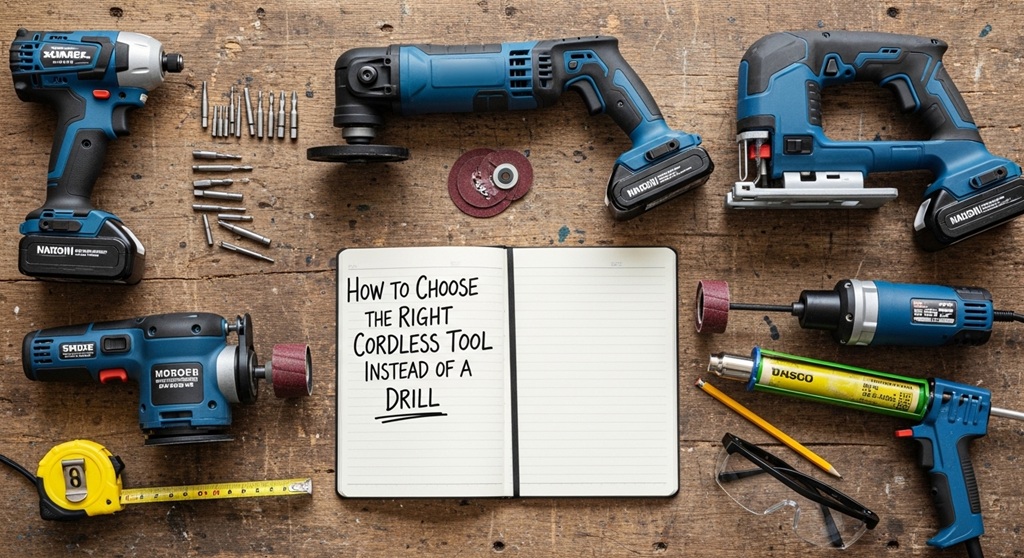
Quick Answer
Professionals use multiple cordless tools because each tool improves efficiency, accuracy, and safety for specific tasks.
Professional Workflow Example
Consider a carpenter installing a wooden deck.
- Cut framing boards using a cordless circular saw
- Drive structural screws using an impact driver
- Drill pilot holes using a cordless drill
- Trim edges with a multi-tool
Using one drill for all these steps would significantly slow the process.
Professional toolkits are designed around task specialization.
How Can DIY Users Build a Practical Cordless Tool Kit?
Quick Answer
A practical cordless toolkit should start with four essential tools: a drill, impact driver, cordless saw, and oscillating multi-tool.
Starter Tool Kit Example
| Tool | Main Purpose |
|---|---|
| Cordless Drill | Drilling holes |
| Impact Driver | Driving screws |
| Cordless Circular Saw | Cutting wood |
| Oscillating Multi-Tool | Detail work |
This combination covers most home repair and DIY tasks.
Conclusion: Choosing the Right Cordless Tool Improves Efficiency
Relying on a cordless drill for every task limits productivity and increases the difficulty of many jobs. Impact drivers, cordless saws, and multi-tools are designed to solve specific problems that drills cannot handle efficiently.
When you match the tool to the task, work becomes faster, safer, and more precise. Contractors already follow this principle on professional jobsites, and DIY users can benefit from the same approach.
If you are building or upgrading your toolkit, start by identifying the types of projects you complete most often. Then select cordless tools that specialize in those tasks.
Call to Action:
Before starting your next project, evaluate whether a drill is truly the best option. Explore specialized cordless tools such as impact drivers, multi-tools, and cordless saws to improve your workflow and achieve better results.
Frequently Asked Questions
Can an impact driver replace a drill?
No. Impact drivers are designed for driving fasteners, while drills are designed for drilling holes. Many professionals use both tools together because they serve different purposes.
Are cordless multi-tools worth buying?
Yes. Multi-tools are highly useful for renovation, trimming, sanding, and small cutting jobs. Their interchangeable blades allow them to perform multiple functions in tight spaces.
Which cordless saw is best for beginners?
A cordless circular saw is often the best starting point. It can perform straight cuts in lumber, plywood, and boards used in most DIY projects.
What battery voltage is best for cordless tools?
18V or 20V cordless tools offer a balance of power and runtime, making them suitable for most professional and DIY tasks.
How long do cordless tool batteries last?
Lithium-ion batteries typically last 3–5 years depending on usage cycles, storage conditions, and charging habits.
Do professionals still use corded tools?
Yes. Corded tools are still used for heavy-duty applications where unlimited power is needed. However, cordless tools now dominate many construction and DIY environments.
Read More Also: How Different Golf Balls Affect Your Game Performance
Find out: Are Cheap Surf Casting Rods Worth It? What to Know Before Buying
No Comments