
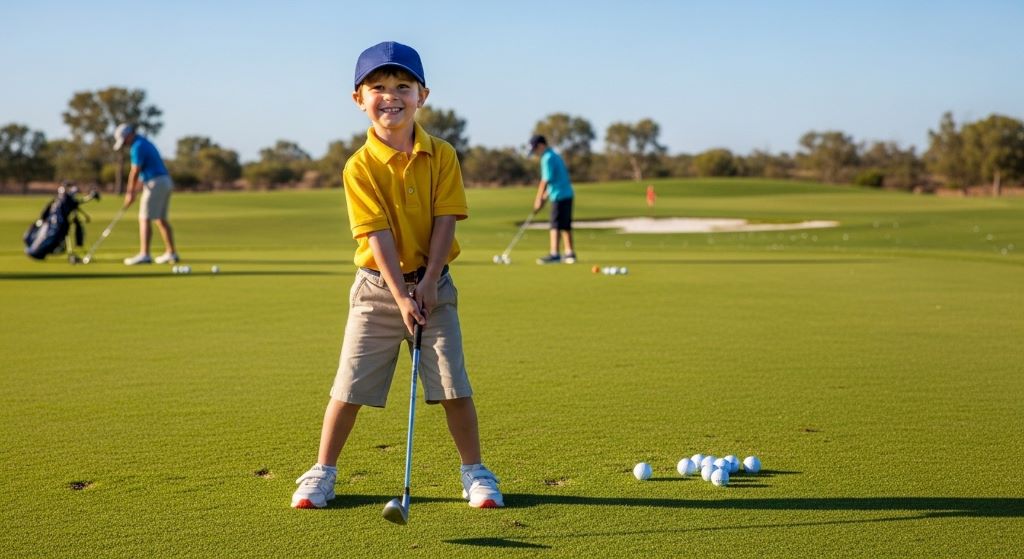
18 Feb How to Choose Lightweight Golf Clubs for Kids Learning to Play
Getting children started with golf can be one of the most rewarding experiences for parents and young athletes alike. However, selecting the right equipment makes all the difference between a child who falls in love with the game and one who becomes frustrated. The clubs you choose will significantly impact their learning curve, enjoyment, and overall development as a golfer.
Why Proper Club Selection Matters for Young Golfers
Children are not simply small adults. Their bodies work differently, and their strength levels vary considerably from grown-ups. Using adult clubs or poorly matched equipment can lead to bad habits, potential injuries, and a quick loss of interest in the sport. Therefore, investing time in selecting appropriate clubs pays dividends in your child’s golfing journey.
Young players need equipment that allows them to develop proper swing mechanics from the start. When clubs are too heavy or too long, children compensate with incorrect postures and movements. These compensations become ingrained over time, making them harder to correct later. Starting with the right equipment sets a solid foundation for future improvement.
Understanding Club Weight and Why It Matters
Weight is perhaps the most critical factor when choosing golf clubs for children. A club that feels heavy in a child’s hands will slow down their swing speed and cause fatigue quickly. Additionally, heavy clubs make it difficult for young players to maintain proper form throughout their round.
Lightweight clubs allow children to generate adequate swing speed without straining. This natural speed development helps them learn timing and rhythm, which are essential elements of a good golf swing. Moreover, lighter equipment keeps the game fun rather than physically exhausting.
When evaluating weight, consider your child’s age, size, and strength level. A seven-year-old will need much lighter clubs than a twelve-year-old. However, individual differences matter too. Some children are naturally stronger or taller for their age, while others may be smaller or still developing their athletic abilities.
Age and Height Guidelines for Club Selection
Manufacturers typically categorize junior clubs by age groups, but height provides a more accurate measure. A child’s height determines the proper club length, which directly affects their ability to make solid contact with the ball. Using clubs that are too long forces children to stand too far from the ball or hunch over awkwardly.
For children between 36 and 42 inches tall, ultra-light starter sets work best. These typically include a driver, a fairway wood, a hybrid, and a putter. As children grow to 42-52 inches, they progress to slightly longer clubs with additional options. Teenagers approaching adult height may use clubs closer to standard lengths but still benefit from lighter shafts.
Measure your child’s height from the ground to their wrists when their arms hang naturally at their sides. This measurement helps determine the ideal club length. Remember that children grow quickly, so reassess every six months to ensure their equipment still fits properly.
Shaft Flexibility and Material Considerations
Shaft flexibility plays a crucial role in helping young golfers achieve distance and accuracy. Easy swing junior clubs typically feature highly flexible shafts that bend more during the swing, creating a whipping effect that adds distance without requiring extra strength.
Graphite shafts are the preferred choice for junior players. They weigh significantly less than steel while still providing adequate durability. The lighter weight allows children to swing faster and develop better tempo. Furthermore, graphite absorbs vibration better, making mishits less jarring for young hands.
The flexibility rating matters immensely. Junior-specific shafts are designed with extra flex to accommodate slower swing speeds. This flexibility helps launch the ball higher and farther, giving children immediate positive feedback. When they see the ball flying well, their confidence and enthusiasm grow naturally.
Clubhead Design and Forgiveness Factors
Forgiving golf clubs for children feature larger clubheads with expanded sweet spots. These design elements help young players achieve better results even when they don’t hit the ball perfectly center. Since developing consistent contact takes time, forgiveness keeps the learning process encouraging rather than discouraging.
Oversized drivers and fairway woods give children more surface area to work with. When they miss the center slightly, the ball still travels reasonably well. This forgiveness is essential during the learning phase when hand-eye coordination is still developing. Additionally, perimeter weighting in these clubs stabilizes the clubhead through impact, reducing twisting on off-center hits.
Hybrid clubs deserve special mention in junior sets. They combine the distance of fairway woods with the control of irons, making them easier to hit from various lies. Most junior sets now include at least one hybrid because they build confidence and help children transition between different club types more smoothly.
Grip Size and Comfort
Proper grip size often gets overlooked, yet it significantly affects a child’s ability to hold the club correctly and swing comfortably. Grips that are too large prevent children from properly releasing the club through impact, while grips that are too small cause excessive hand action and inconsistency.
Junior-specific grips are thinner than adult grips, matching smaller hand sizes. They should feel comfortable without requiring the child to squeeze tightly. When children can maintain a relaxed grip pressure, they swing more freely and develop better feel for the clubhead. Moreover, proper grip size prevents blisters and hand fatigue during practice sessions.
Check that your child can wrap their fingers around the grip comfortably. The fingertips of the bottom hand should just barely touch the pad at the base of the thumb. If there’s a significant gap or if the fingers dig deeply into the palm, the grip size needs adjustment.
Complete Set Versus Individual Clubs
Deciding between a complete junior set and individual clubs depends on your child’s experience level and commitment to the game. Complete sets offer excellent value for beginners, providing everything needed to learn the basics. These packages typically include a driver, fairway wood or hybrid, a few irons, a wedge, a putter, and a lightweight bag.
For children just starting out, a half-set with five or six clubs proves sufficient. Too many options can confuse young players who are still learning which club to use in different situations. As they progress and develop preferences, you can add specific clubs to fill gaps in their set.
Individual clubs make sense for children who have outgrown their current set but haven’t reached adult sizes yet. Sometimes buying just new irons or woods allows you to extend the life of other clubs that still fit. This approach can be more economical while ensuring your child has properly fitted equipment where it matters most.
Budget Considerations Without Compromising Quality
Golf equipment for juniors doesn’t need to break the bank, but extremely cheap options often do more harm than good. Poor quality clubs may be heavy, poorly balanced, or lack the forgiveness young players need. Therefore, finding the middle ground between affordability and quality is essential.
Many reputable manufacturers offer excellent junior lines at reasonable prices. These clubs incorporate technology from their adult lines but are specifically engineered for young players. Buying from established brands typically ensures better construction quality and appropriate specifications for developing golfers.
Consider buying used clubs from golf shops or online marketplaces. Junior clubs often have plenty of life left since children outgrow them before wearing them out. However, inspect used clubs carefully for damage, rust, or excessive wear. The savings can be substantial while still providing quality equipment.
Testing Clubs Before Purchasing
Whenever possible, have your child test clubs before buying. Many golf retailers and courses offer demo days or fitting sessions for juniors. Watching your child swing different options reveals which clubs they handle most comfortably and confidently. Their feedback about how clubs feel matters enormously.
During testing, observe their swing mechanics and ball flight. Clubs that are too heavy will cause them to slow down or lose balance. Conversely, properly weighted clubs allow smooth, controlled swings. The ball should launch easily and fly consistently, even on less-than-perfect strikes.
Pay attention to your child’s enthusiasm level with different clubs. If they seem more excited and engaged with certain options, that positive association will carry into their practice and play. Golf should be enjoyable, and equipment that feels good contributes significantly to that enjoyment.
Adjustability and Growth Considerations
Some manufacturers now offer adjustable junior clubs that extend or modify as children grow. These innovative designs can provide multiple seasons of use, making them cost-effective despite higher initial prices. Length-adjustable clubs typically feature extension systems in the shaft or grip areas.
While adjustability offers advantages, ensure the clubs still meet weight and flex requirements at different settings. Sometimes extending a club changes its swing weight or balance point, potentially affecting performance. Read reviews and specifications carefully before investing in adjustable options.
Planning for growth doesn’t mean buying clubs your child will grow into. Oversized equipment hinders development and frustrates young players. Instead, accept that children will outgrow clubs and budget for replacements every couple of years. The investment in properly fitted equipment pays off in skill development and sustained interest.
Putter Selection for Young Players
Putters deserve special attention because putting represents roughly half of all shots in golf. A putter that’s too long causes children to stand awkwardly, while one that’s too heavy makes it difficult to develop smooth tempo. Junior putters should be appropriately sized and weighted for small hands and shorter stature.
Mallet-style putters often work well for children because their larger heads and higher moment of inertia provide more forgiveness. The extra weight in the putter head helps stabilize the stroke, compensating for less developed fine motor control. Additionally, alignment aids on mallet putters help young players aim more accurately.
Ensure the putter length allows your child to address the ball with their eyes directly over it and their arms hanging naturally. This setup promotes a pendulum-style stroke that’s easier to repeat consistently. Proper putter fitting builds confidence on the greens, which translates to lower scores and more enjoyment.
Building a Progressive Equipment Plan
Think of junior golf equipment as a progression rather than a one-time purchase. As your child grows and improves, their needs will change. Starting with basic, forgiving clubs allows them to develop fundamental skills. Later, you can introduce clubs with slightly less forgiveness that reward improving ball-striking abilities.
Create a timeline for equipment upgrades based on your child’s growth patterns and skill development. Most children need new clubs every 18 to 24 months during their rapid growth years. Tracking their height and monitoring how current clubs fit helps you anticipate when changes are needed.
Keep records of what works well for your child. Note which clubs they use most confidently and which cause struggles. This information helps guide future purchases and identifies patterns in their preferences. Some children prefer certain club types or designs, and recognizing these preferences makes equipment selection easier as they advance.
Conclusion
Choosing lightweight golf clubs for young players requires careful consideration of multiple factors. Weight, length, flexibility, and forgiveness all contribute to whether clubs help or hinder a child’s development. Starting with forgiving golf clubs for children and easy swing junior clubs sets the foundation for proper technique and lasting enjoyment of the game.
Remember that properly fitted equipment changes as children grow. Regular assessment ensures they always have clubs that match their current size and ability level. While this means periodic investments, the payoff comes in better skill development, increased confidence, and a genuine love for golf that can last a lifetime.
Taking time to select appropriate clubs shows your child that their golfing journey matters. When they succeed with properly fitted equipment, their enthusiasm grows naturally. This positive reinforcement creates motivated young golfers who look forward to practice and improvement. Therefore, invest wisely in equipment that supports their development and watch them flourish on the course.
Frequently Asked Questions
What age should children start using their own golf clubs?
Children can start using their own clubs as early as age four or five, depending on their interest and physical development. However, the clubs must be specifically designed for their size and strength level. Starting with just a few clubs keeps things simple while they learn basic skills.
How often should I replace my child’s golf clubs?
Most children need new clubs every 18 to 24 months during their growing years. However, monitor your child’s height and comfort level with current clubs. If they’re stretching to reach the ball or struggling with club weight, it’s time for an upgrade regardless of the timeline.
Are expensive junior clubs worth the investment?
Mid-range quality clubs from reputable manufacturers offer the best value. They provide necessary features like lightweight construction and forgiveness without excessive cost. Extremely cheap clubs often lack proper specifications, while top-tier junior clubs may be unnecessary unless your child is highly competitive.
Can my child use cut-down adult clubs?
Cutting down adult clubs is not recommended. Adult clubs are too heavy, and simply shortening them doesn’t address weight or flex issues. Junior-specific clubs are engineered with appropriate specifications for young players, making them far more suitable for development and enjoyment.
How do I know if clubs are the right weight for my child?
Watch your child swing the clubs. If they can complete a smooth, balanced swing without slowing down or losing control, the weight is appropriate. They should be able to swing multiple times without excessive fatigue. If they struggle to control the club or tire quickly, the clubs are too heavy.
Related Topics:
How to Start Golf on a Budget with the Right Clubs
How Do Jump on a Skateboard Without an Ollie
No Comments