

17 Feb How to Choose a Portable Baby Swing That Helps Soothe Colic
Dealing with a colicky baby can leave parents feeling exhausted and helpless. The constant crying, the sleepless nights, and the desperate search for anything that might bring relief can be overwhelming. Many parents have found that a soothing baby swing offers much-needed comfort for their fussy infants, providing the gentle motion that seems to calm even the most distressed babies.
Choosing the right portable swing for your colicky baby involves understanding what features truly make a difference. Not all swings are created equal, and what works for one baby might not work for another. This comprehensive guide will help you navigate the options and select a swing that could transform those difficult hours into peaceful moments for both you and your little one.
Understanding Colic and Why Motion Helps
Colic affects approximately one in five babies, typically beginning around two to three weeks of age and often resolving by three to four months. These babies cry for extended periods, usually in the late afternoon or evening, without any apparent cause. The crying can last for hours, leaving parents feeling frustrated and worried.
Experts believe that colic may result from several factors, including an immature digestive system, gas, overstimulation, or a developing nervous system. While the exact cause remains unclear, parents have long observed that certain motions seem to provide relief. This is where portable swings become invaluable tools.
Rhythmic motion mimics the sensations babies experienced in the womb. For nine months, your baby felt constant gentle movement as you walked, sat, and went about your daily activities. This motion was paired with the sound of your heartbeat and the muffled sounds of the outside world. Recreating these conditions can help soothe an upset infant.
Furthermore, gentle swaying activates the vestibular system, which controls balance and spatial orientation. This stimulation can have a calming effect on babies, helping them regulate their emotions and settle down. Many parents notice their colicky babies relax almost immediately when placed in a swing with the right motion pattern.
Essential Features to Look For
When shopping for a portable swing to help with colic, certain features make a significant difference in effectiveness. Understanding these elements will help you make an informed decision.
Multiple swing speeds allow you to find the perfect tempo for your baby. Some infants prefer slow, gentle movements, while others need faster motion to calm down. Having options means you can adjust the swing based on your baby’s mood and needs at any given time.
The swing motion itself varies between models. Some swings move side to side, others swing front to back, and some offer both directions. Many parents of colicky babies report that side-to-side motion more closely resembles being rocked in arms, making it particularly effective for soothing.
Weight capacity and size restrictions are practical considerations. Your baby will grow quickly, so choosing a swing that accommodates a wider weight range means you’ll get more use from your investment. Additionally, check the minimum weight requirement to ensure it’s safe for your newborn.
Portability matters significantly when you need to move the swing between rooms or take it to grandma’s house. Look for models that fold easily, have carrying handles, or come with travel bags. Lightweight designs make transportation simpler without sacrificing stability.
Battery versus plug-in power affects convenience and cost over time. Battery-operated swings offer more placement flexibility since you’re not limited by outlet locations. However, they require frequent battery changes. Plug-in models or those with AC adapter options eliminate battery costs but restrict where you can position the swing.
The Importance of Vibration Features in Calming Infant Gear
Many modern portable swings include vibration features alongside the swinging motion. This addition might seem minor, but it can significantly impact your baby’s comfort level. The gentle rumbling sensation provides additional sensory input that many babies find soothing.
Vibration mimics the feeling of being in a car, which many parents discover calms their colicky baby. You’ve probably heard stories of parents driving around the block at midnight just to get their baby to sleep. A swing with effective vibration can provide similar relief without leaving your home.
The combination of swinging motion and vibration creates a multi-sensory experience. This layered approach to soothing often works better than motion alone, particularly for babies who don’t respond to traditional rocking. The vibration can also help with gas discomfort, which frequently contributes to colic symptoms.
However, not all vibration features are created equal. Some swings offer weak vibrations that babies barely notice. Others provide adjustable intensity levels, allowing you to find the right strength for your baby’s preferences. Reading reviews from other parents can help identify which models deliver meaningful vibration.
Additionally, consider whether you can use the vibration independently from the swinging motion. This flexibility lets you customize the soothing experience. Sometimes your baby might need just the gentle rumble without the rocking, particularly if they’re already drowsy.
Sound Options and Their Role
Many portable swings include built-in sound features that complement the physical motion. These sounds serve an important purpose in creating a calming environment for your colicky baby.
White noise effectively masks household sounds that might startle or overstimulate your baby. The consistent, unchanging sound provides a predictable auditory environment. Many babies with colic are particularly sensitive to their surroundings, so creating this buffer can prevent additional distress.
Nature sounds like ocean waves, rainfall, or gentle streams offer variety while maintaining a soothing quality. Some babies respond better to these natural sounds than to mechanical white noise. Having multiple options lets you experiment to find what works best.
Lullabies and gentle melodies can also be effective, though some experts suggest instrumental versions work better than those with lyrics. Music provides rhythm and pattern that babies find comforting. However, ensure the volume is adjustable since some babies prefer very quiet sounds while others need it slightly louder.
The quality of the sound system matters more than you might expect. Tinny, distorted audio can be irritating rather than soothing. If possible, test the sound quality before purchasing or check reviews that specifically mention this feature.
Safety Considerations You Cannot Ignore
Safety must be your top priority when selecting any baby equipment, including swings. Understanding and following safety guidelines protects your precious baby from potential hazards.
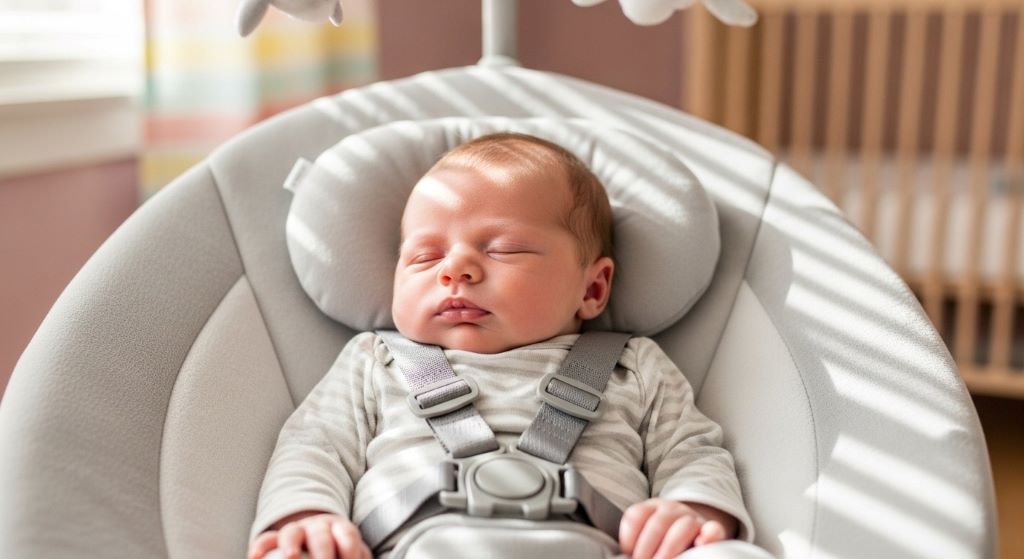
Five-point harnesses provide the best security for babies in swings. This harness system secures your baby at the shoulders, waist, and between the legs. Even if your baby isn’t old enough to wriggle around, using the harness every time creates a safe habit and protects against unexpected movements.
Stability is crucial for preventing tip-overs. The swing’s base should be wide and sturdy enough to support the weight of your baby and withstand any motion. Check that the swing doesn’t wobble or feel unstable when empty before placing your baby in it.
Frame construction quality affects both safety and longevity. Metal frames typically offer more durability than plastic ones, though they add weight. Examine all connection points where the frame pieces join together. These should be solid and secure without any looseness.
Fabric quality impacts comfort and hygiene. The material should be soft against your baby’s delicate skin but also durable enough to withstand repeated washing. Machine-washable fabrics make cleanup easier when dealing with spit-up or diaper leaks.
Certifications from recognized safety organizations indicate the swing meets specific standards. Look for approval from the Juvenile Products Manufacturers Association or similar regulatory bodies. These certifications mean the product has undergone rigorous testing.
Seat Comfort and Positioning
The seat itself plays a major role in whether your baby finds the swing soothing or irritating. Several aspects of seat design influence comfort and effectiveness for colicky babies.
Recline positions allow you to adjust the angle based on your baby’s age and comfort needs. Newborns require more recline to support their developing neck muscles. As your baby grows and gains better head control, you can gradually adjust to a more upright position.
Padding thickness and distribution affect comfort during extended swing sessions. However, excessive padding can create safety concerns by allowing babies to sink too deeply. The padding should provide cushioning while maintaining firm support that keeps your baby’s airway clear.
Head and body support become especially important for younger babies. Many swings include infant inserts that provide additional support around the head and sides. These inserts create a snug, womb-like environment that many colicky babies find comforting. Remove these inserts once your baby outgrows them to prevent overheating.
Seat width matters for longevity and comfort. A seat that’s too narrow will quickly become uncomfortable as your baby grows. Conversely, a seat that’s too wide might not provide the secure feeling that helps soothe younger infants.
Portability and Storage Considerations
Since you’re specifically looking for a portable option, understanding what makes a swing truly portable helps narrow your choices. Portability involves more than just being able to move the swing.
Folding mechanisms vary widely between models. The best designs fold with minimal steps and without requiring tools. Some swings collapse flat for storage, while others fold into a more compact but three-dimensional shape. Consider your storage space and transportation needs when evaluating folding styles.
Weight significantly impacts portability, especially if you plan to carry the swing between floors or to different locations regularly. Models weighing under 15 pounds are generally manageable for most parents. However, extremely lightweight models sometimes sacrifice stability, so balance is key.
Handle placement makes carrying easier. Some swings feature integrated handles, while others require you to grip the frame. If you’ll be moving the swing frequently, comfortable carrying handles are worth prioritizing.
Setup and takedown time affects daily usability. A swing that takes 10 minutes to assemble each time you want to use it won’t get used as often. Look for designs that set up quickly and intuitively without consulting the manual every time.
Additional Features Worth Considering
Beyond the essential elements, several other features can enhance your experience with a portable swing and make it more effective for soothing your colicky baby.
Timer functions let you set how long the swing operates before automatically shutting off. This feature saves battery life and prevents your baby from becoming too dependent on constant motion. Many swings offer timer settings ranging from 15 minutes to continuous operation.
Toy bars or mobiles provide visual stimulation for babies during calm periods. However, these can be overstimulating for a colicky baby during a fussy episode. Choose swings where these elements are removable so you can create a simpler environment when needed.
Convertibility adds value by extending the product’s usefulness. Some swings convert to stationary seats or rockers, giving you multiple calming infant gear options in one purchase. This versatility can be particularly helpful as your baby grows and their needs change.
Bluetooth connectivity and smartphone apps appear on some modern swings. These features let you control settings remotely without disturbing your baby. While not essential, they add convenience during those moments when you’ve finally gotten your baby settled and don’t want to risk waking them.
Budget Considerations and Value
Portable swings range dramatically in price, from budget-friendly options under fifty dollars to premium models costing several hundred. Understanding what drives these price differences helps you determine where to invest your money.
Basic models typically offer fewer speed settings, simpler motion patterns, and minimal extra features. However, many budget swings still provide effective soothing for colicky babies. Don’t assume you need the most expensive model to get results.
Mid-range options usually include better-quality construction, more speed and sound options, and additional comfort features. These models often represent the best value, providing the features that truly matter without unnecessary bells and whistles.
Premium swings incorporate advanced technology, superior materials, and innovative features. While these can be excellent, consider whether the extra cost brings meaningful benefits for your specific situation. Sometimes simpler is better, especially for calming an overstimulated colicky baby.
Used swings can save money, but exercise caution. Check for recalls on any used model before purchasing. Inspect the swing carefully for wear, damage, or missing parts. Ensure all safety features function properly and that you can obtain a manual with complete assembly instructions.
Making Your Final Decision
After researching features and options, making the final decision can still feel overwhelming. Taking a systematic approach helps you choose confidently.
Create a list of must-have features based on your specific needs. If you live in a small apartment, portability and compact storage might top your list. If you have a large house, you might prioritize features over portability.
Read reviews from other parents of colicky babies specifically. Their experiences provide valuable insights into which features actually help calm fussy infants. Look for patterns in reviews rather than focusing on individual opinions.
Consider your baby’s temperament and preferences, even though they’re young. If your baby seems to calm down in the car, prioritize vibration features. If they settle during walks in the stroller, focus on the swinging motion quality.
Think about longevity and multiple children. If you plan to have more babies, investing in a higher-quality swing that will last through multiple children might be worthwhile. However, if this is your only child, you might prefer a more affordable option.
Testing and Adjusting After Purchase
Getting the swing home is just the beginning. Finding the right settings and approach takes some experimentation and patience.
Start with the gentlest settings and gradually increase intensity if needed. Some babies become more agitated with vigorous motion or loud sounds. Beginning slowly helps you gauge your baby’s response without overwhelming them.
Try different times of day to identify when the swing works best. Many colicky babies have their worst episodes in the evening. Using the swing during these predictable fussy periods can help establish a calming routine.
Combine the swing with other soothing techniques for better results. Swaddling your baby before placing them in the swing often works better than using the swing alone. The combination recreates more aspects of the womb environment.
Watch for signs that your baby is ready to transition out of the swing. Some babies develop a strong preference for sleeping in the swing, which isn’t recommended for extended sleep periods. Gradually reducing swing time helps prevent this dependency.
When to Seek Additional Help
While a soothing baby swing can provide significant relief, it’s important to recognize when colic might indicate a more serious issue requiring medical attention.
Persistent crying that doesn’t respond to any soothing attempts needs evaluation. While colic is common and generally harmless, it’s important to rule out underlying medical conditions. Your pediatrician can assess whether your baby’s crying is normal colic or something else.
Changes in crying patterns warrant a doctor visit. If your baby’s cry sounds different, becomes more high-pitched, or is accompanied by other symptoms like fever, vomiting, or changes in eating, contact your healthcare provider promptly.
Your own mental health matters tremendously during this challenging time. If you feel overwhelmed, depressed, or angry, reach out for support. Many resources exist to help parents cope with the stress of caring for a colicky baby.
Conclusion
Choosing a portable baby swing to help soothe your colicky infant involves balancing multiple factors including motion patterns, vibration features, safety, portability, and budget. The right calming infant gear can provide much-needed relief during those difficult crying episodes, giving both you and your baby a chance to rest and reset.
Remember that every baby is unique, and what works wonderfully for one might not work for another. Therefore, focus on finding a swing with adjustable features that let you customize the experience for your baby’s specific needs. Prioritize safety above all else, ensuring any swing you choose meets current safety standards and includes proper restraint systems.
Additionally, keep in mind that a swing is a tool to help you through a temporary, though challenging, phase. Colic does end, typically by three to four months of age. In the meantime, combining a quality swing with other soothing techniques, patience, and support from family and friends will help you navigate this difficult time.
The investment in a good portable swing often pays for itself many times over in restored peace and sleep. By carefully considering the features outlined in this guide and choosing a swing that matches your family’s needs, you’ll be well-equipped to provide comfort for your colicky baby during those tough moments.
Frequently Asked Questions
How long can my baby safely stay in a swing each day?
Most pediatricians recommend limiting swing time to 30 minutes per session, with a maximum of two hours total per day. Babies need variety in positioning to develop properly. Never let your baby sleep in the swing overnight or for extended naps, as this increases the risk of positional asphyxiation. Use the swing as a soothing tool during fussy periods, then transfer your baby to a safe sleep surface.
Will using a swing make my baby dependent on motion for sleep?
This concern is valid but manageable. Use the swing strategically during particularly difficult periods rather than for every sleep. Gradually reduce reliance as your baby’s colic improves. Many parents successfully use swings during the peak colic months without creating long-term sleep associations. The key is varying sleep locations and methods as your baby develops.
What’s the difference between a swing and a bouncer for colic?
Swings provide continuous automated motion, while bouncers typically require manual operation or respond to your baby’s movements. For colicky babies, swings often work better because they maintain consistent motion without parental intervention. This allows you to attend to other tasks or simply rest. However, some babies prefer the bouncing sensation, so individual preference matters.
Can I use a portable swing for a newborn immediately after birth?
Most portable swings are safe for newborns, but always check the manufacturer’s minimum weight requirements. Many models require babies to be at least five to seven pounds. Ensure your newborn has adequate head and neck support, either through built-in infant inserts or added accessories. Always use the five-point harness and never leave your newborn unattended in the swing.
How do I know if the swing is actually helping my baby’s colic or just masking symptoms?
Colic causes crying but isn’t itself a disease requiring treatment. If the swing calms your baby and provides relief from crying episodes, it’s helping manage colic symptoms, which is the goal. However, if your baby shows signs of pain like pulling legs up, arching their back severely, or crying inconsolably despite the swing, consult your pediatrician to rule out other issues like reflux or allergies.
Related Topics:
The baby walker myths and truths
Baby Sleep Regression Survival Kits: Your Guide to Restful Nights
No Comments