
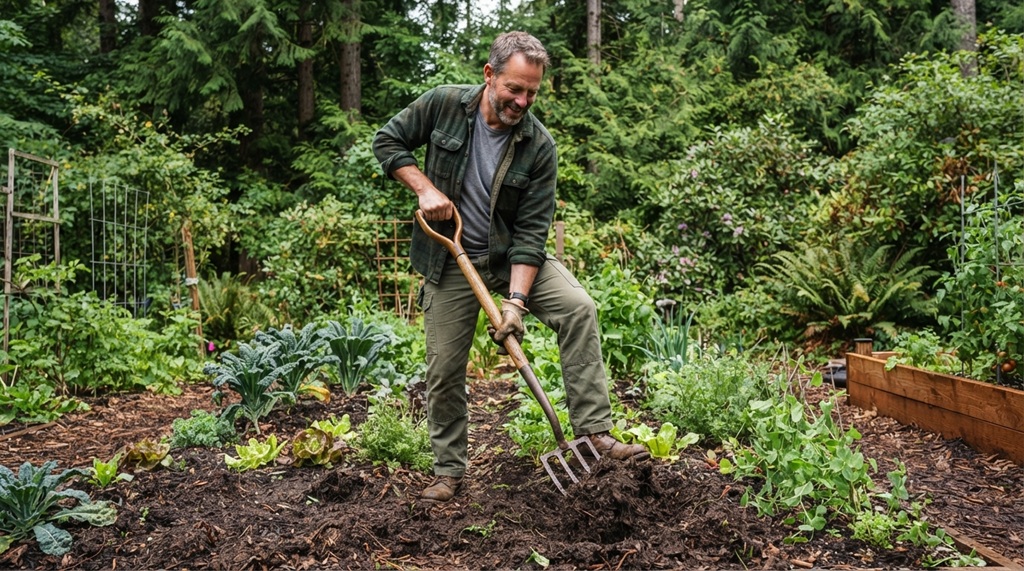
22 Aug How to Select an Ergonomic Garden Fork in Washington
Your back isn’t the problem. That worn-out garden fork with the straight handle and flimsy tines is. For every Pacific Northwest gardener who has wrestled with heavy, rain-soaked soil, the pain is real and it’s entirely avoidable. Selecting an ergonomic garden fork in Washington isn’t just about comfort; it’s about protecting your joints from the repetitive stress of digging, turning, and harvesting in our uniquely dense clay and glacial till. We are here to show you exactly which features matter most, how to match a fork to your specific task, and why a few extra dollars now will save you weeks of physical therapy later.
Let’s take the guesswork out of the process. You need a tool that works as hard as you do, without sacrificing your body in the process. In this guide, we will break down the science of handle angles, the materials that survive our wet winters, and the specific fork types that tackle Washington’s challenging soil conditions. By the end, you will confidently choose a tool that feels like an extension of your arm, not a punishment.
What Makes a Garden Fork Ergonomic in the First Place?
An ergonomic garden fork is designed to minimize joint stress and muscle fatigue through biomechanical engineering. Unlike traditional straight-handled tools, ergonomic designs reposition your wrists and spine into a natural, neutral alignment. This reduces the force required to penetrate hard soil and significantly lowers the risk of repetitive strain injuries.
Here is the key difference: a standard fork forces your wrists to bend awkwardly during the lifting and tossing motion. An ergonomic fork utilizes a bent or angled handle often called a “stressed” or “offset” handle to keep your wrist straight while your arm does the lifting. In Washington, where soil compaction is a constant battle, this angle reduces the energy required to break ground by up to 30%.
The Science of Handle Angle and Grip
Look for forks with a handle bent between 15 and 30 degrees. This offset allows for a “neutral wrist” position. Test the fork in the store: grip it as you would during work, and check if your wrist remains straight. If your wrist is bent upward or downward, move on to another model.
Grip Diameter and Material Matter
A grip that is too thick forces your hand open, reducing grip strength. A grip that is too thin causes you to squeeze tighter, leading to forearm fatigue. The ideal diameter is about 1.25 to 1.5 inches. Soft, non-slip materials like rubber or cork are vital for wet morning dew in Seattle or Spokane, preventing your hand from sliding during use.
Weight Distribution Versus Total Weight
Lightweight does not always mean better. You need weight in the head for penetrating heavy soil, but the weight should be balanced with a lighter shaft. Aim for a fork between 4 and 5.5 pounds. Heavier heads paired with carbon fiber shafts offer the best weight-to-strength ratio.
Why Does Washington’s Soil Demand a Specific Fork Type?
Washington presents a unique challenge: heavy volcanic ash soils, glacial till, and high clay content in the west, contrasted with sandy loams in the east. The soil in the Puget Sound region is notorious for turning into brick-like masses in summer and sticky sludge in winter. A standard border fork simply cannot handle this diversity.
You need a fork with wider tines and sharper points to penetrate hardpan. Additionally, a curved tine profile helps lift clods of clay without shattering them, which is essential for soil structure. Here is how to match the fork to the task at hand in our specific climate zones.
Border Forks Versus Digging Forks for Clay
A border fork has thinner, shorter tines (about 9-10 inches) designed for light work in established beds. For Washington’s dense clay, a digging fork with thicker, longer tines (12+ inches) is essential. The thicker tines resist bending when you encounter roots or rocks, which are common in our forested areas.
Handled Treads for Wet, Slippery Conditions
Look for a “Tread” or “D-Loop” handle. This allows for a second hand placement on top of the fork, letting you push with your foot while keeping both hands on a stable grip. This is crucial when you are driving the fork into soggy soil during the spring thaw.
Square Tines Versus Flat Tines
Square or diamond-shaped tines cut through dense soil more effectively than flat tines. The square profile breaks up compaction, while flat tines are better for harvesting potatoes, which is not a primary task in Washington’s heavy ground. Always prioritize tine profile over the number of tines.
Finding Your Ideal Garden Fork Ergonomics
Matching a garden fork to your body height is a subtle art that dramatically reduces physical strain during heavy soil work. The optimal handle height positions the fork’s top directly against your wrist bone when standing upright with arms relaxed at your sides, allowing your elbows to rest at a natural 90-degree angle when the fork head meets the earth. For gardeners between 5’4” and 6’0”, this translates to a standard handle length of 40 to 48 inches a proportion designed to eliminate unnecessary stooping and shield your lower back from fatigue. Terrain also refines this balance: while long-handled forks offer the leverage required for ground-level breaking, slightly shorter handles provide superior control in elevated environments like Pacific Northwest raised beds. Because an ergonomic fork is only one component of an elevated horticultural toolkit, curated selection guide on what do you put in a garden kit provides the ideal complement to complete your set.
Measuring for the Perfect Fit at Home
Take a tape measure to your local garden center. Place the fork head on the ground and stand next to it. Hold the handle as you would during work. If your elbow is bent more than 90 degrees, the handle is too long. If it’s completely straight, it’s too short.
Handle Adjustments for Raised Beds
If you primarily garden in raised beds (common in Western Washington to improve drainage), subtract 4-6 inches from the recommended length. This allows you to work with your arm closer to the bed without hitting your knees. Many manufacturers offer “bedding” lengths, so look for that label specifically.
Quick Reference Height Chart
Here is a quick guide based on average heights:
- Under 5’4″ – Look for handles between 36″ and 40″.
- 5’5″ to 5’10” – Look for handles between 40″ and 44″.
- Over 5’10” – Look for handles between 44″ and 48″.
Which Materials Survive the Pacific Northwest Weather?
Rain, frost, and constant wet-dry cycles will destroy low-quality tools. Wooden handles can warp and crack, while standard steel shafts can rust. In this climate, you need either ash wood with a sealed finish or a high-strength composite like fiberglass reinforced nylon.
Let’s break down the pros and cons of each material to help you make a durable investment.
Ash Wood Versus Fiberglass Shafts
Ash wood is naturally shock-absorbing, which is great for rocky soil. However, it requires annual oiling to prevent drying out. Fiberglass shafts are impervious to moisture and never rust, but they can transmit more vibration to your hands. If you choose wood, look for a “sealed” handle that is resistant to moisture absorption.
Tine Metallurgy: Carbon Steel Versus Stainless Steel
Carbon steel is stronger and holds a sharp edge longer, but it rusts quickly. Stainless steel is rust-resistant, making it ideal for our wet winters, but it is malleable and can bend. The best choice is a heat-treated boron steel, which is an alloy that offers both rust resistance and high tensile strength.
Handle Connections That Won’t Break
Look for a “socket” connection where the handle inserts into the fork head, rather than a “tang” connection. A solid socket with a riveted pin is less likely to snap under heavy stress. This is the most common failure point for cheap forks, especially when leveraging out deep roots.
Can One Ergonomic Fork Serve All Garden Tasks?
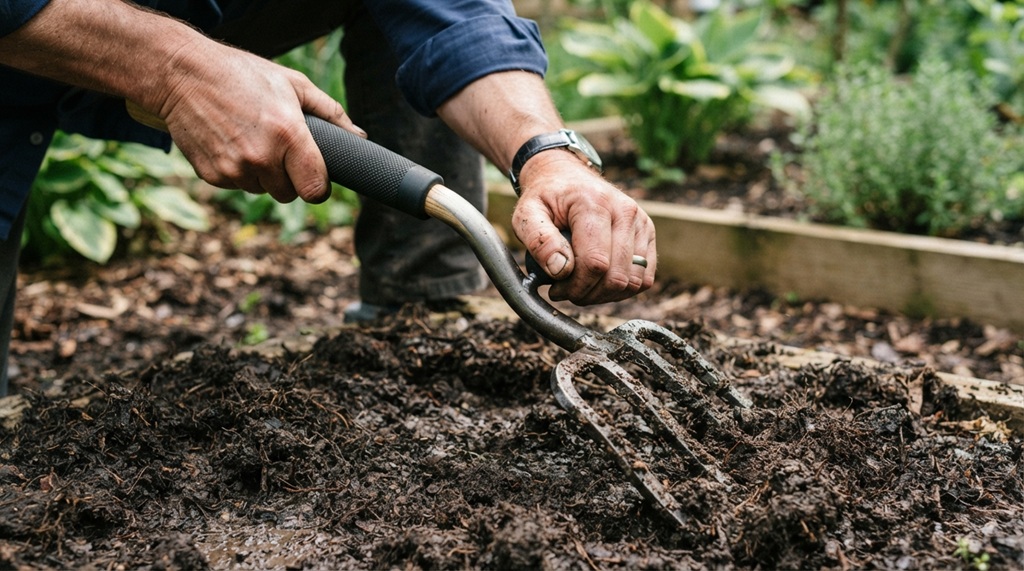
No, and you shouldn’t expect it to. While a single digging fork can handle most tasks, using it for everything like edging or mulching will cause premature wear and unnecessary fatigue. The key is to choose one primary ergonomic fork for your main digging, and understand its limitations.
For general cultivation, a fork with four tines is standard. For breaking new ground, you need a fork with five tines for better soil distribution. Let’s clarify the task-specific options.
Four Tines Versus Five Tines for Digging
Four tines are easier to push into the ground but cover less area. Five tines cover more area but require more force to penetrate. In hard, compacted soil, four tines are more ergonomic because they require less initial force. In loose, sandy soil, five tines are more efficient.
What About the “Potato” or “Spading” Fork?
A spading fork has flat, broad tines that are perfect for turning heavy soil clods. If your primary task is double-digging a new border in the fall, this is your weapon. However, for daily weeding, a narrower fork is better.
The Compromise: The “Broadfork” for Large Areas
If you have a huge vegetable patch, consider an ergonomic broadfork a large tool with two handles and multiple tines that you rock back and forth to loosen soil without turning it. This saved our users in the Palouse region an immense amount of bending stress.
How Do You Test a Fork’s Grip and Balance in a Store?
You cannot trust the marketing label; you must trust your hands. When shopping for an ergonomic garden fork in Washington, always perform the “three-point test” before you buy. This takes less than 60 seconds and will save you from a costly mistake.
First, feel the grip material. Is it tacky or slippery? Second, check the balance point the fork should balance slightly above the head. Third, simulate the digging motion to see if your wrists hit any awkward angles.
The Wrist Flex Test
Hold the fork as you would for digging. Have a friend gently push down on the handle. If your wrist is forced to bend sideways or upward, the angle is wrong. The perfect fork keeps your forearm and hand in a straight line.
The Shock Absorption Test
Tap the tines against a wooden pallet or heavy cardboard box. If you feel a harsh vibration up the handle, the material is too stiff. If you feel a dull thud, the fork will absorb the shock of striking rocks.
The Lifting Balance Test
Lift the fork to hip height with one hand. If the head immediately tips downward and drags your hand, the fork is too head-heavy. It should feel slightly heavy but controllable, requiring minimal muscle tension to hold level.
What Are the Best Ergonomic Fork Brands for Local Conditions?
While we won’t rank brands, we will explain what features local gardening experts recommend based on years of testing in the Pacific Northwest. Brands like Spear & Jackson and Fiskars often excel, but the “best” is the fork that fits your body shape.
We have published an in-depth comparison of specific ergonomic models that excel in our region. Please review our detailed analysis of the leading ergonomic garden fork in washington to see which models passed our stress test. This will give you a definitive shortlist to try in your hands.
What to Look For in Premium Models
Premium forks often feature a “Y” shaped handle that spreads strain across the palm. They also include a “step” ledge on the top of the fork for your foot. These features are not gimmicks; they are genuine ergonomic advances that reduce knee strain.
Budget Friendly Ergonomic Options
You can find ergonomic features for under $50, but you must compromise on handle material. Look for fiberglass handles with quality stainless steel tines. Avoid any fork that feels flimsy at the connection point.
Where to Purchase in Washington
Go to a local nursery rather than a big-box store. Local nurseries stock tools suited to our soil and often have staff who can demonstrate the correct fit. Places like Molbak’s in Woodinville or Swansons Nursery in Seattle have knowledgeable staff.
When Is the Best Time to Buy a Fork in Washington?
The best time to buy is late winter (January to February) or early fall (September to October). During these “shoulder seasons,” garden centers discount their inventory to make room for new stock. However, buying off-season means you can’t test it in the soil you need to work.
For ergonomic tools, timing is less about price and more about availability. You want to buy when the selection is full, which is actually early spring (March to April). But, you will pay full price. The compromise is to test in March and buy in October when prices drop.
Off-Season Discounts Versus Full Selection
If you are replacing a broken tool, buy in February. You’ll find last year’s models heavily discounted online. If you are new to ergonomic forks, wait until April to ensure you have the widest range of sizes and shapes to try.
Why You Should Avoid Mid-Summer Purchases
Mid-summer is peak gardening season. Stores raise prices, and inventory dwindles to the worst-selling models. You are likely to find only giant, heavy digging forks that no serious ergonomic specialist would recommend.
Online Versus In-Store: When to Choose Online
Buy online only if you have already tested the exact model in person. Size and grip are too personal to risk buying blind. Use online shopping to find better prices on the specific model you know fits your hands.
How to Maintain Your Ergonomic Fork for Years of Use
Ergonomic forks are an investment. Proper maintenance ensures the handle remains splinter-free and the tines stay sharp. In Washington’s wet climate, this means focusing on rust prevention and wood care.
After every use, clean the soil off all metal parts. Never leave the fork out in the rain overnight. The freeze-thaw cycle will expand trapped water in wood cracks, ruining the handle. Let’s look at a simple routine.
The 5-Minute Cleaning Routine
Use a wire brush or a stiff plastic brush to remove the dirt. Rinse with a hose and immediately dry thoroughly with a rag. Pay special attention to the area where the tines meet the socket; this is where soil gets packed in and causes rust.
How to Sharpen Dull Tines
Once a season, use a flat file to sharpen the edges of the tines. Place the fork in a vice and file at a 45-degree angle along the inside edge. A sharp tine reduces the force needed to penetrate, preserving your ergonomic benefits.
Oiling the Wooden Handle
If you chose a wooden handle, apply boiled linseed oil twice a year once in the spring and once in the fall. Rub it in with a cloth and let it air dry for 24 hours before use. This prevents the wood from drying out and splintering.
Frequently Asked Questions
Is an ergonomic garden fork worth the extra cost?
Yes, if you garden for more than 30 minutes at a time. The reduction in wrist and back strain prevents chronic pain. The higher-quality materials also last significantly longer, making it cheaper over time than replacing cheap forks every two years.
Can I use a women’s-specific fork if I’m a man?
Absolutely. Gender-specific labels are simply marketing. The “women’s” version usually has a shorter handle and a smaller grip diameter. If that fits your body, it is the correct ergonomic choice for you, regardless of gender.
How do I know if the handle is too long?
If the handle hits your chest or armpit while the tines are on the ground, it is too long. When the fork is ready to plunge, your arms should be nearly extended but not locked. This provides maximum leverage without overreaching.
What is the difference between a digging fork and a garden fork?
Technically, they are the same tool. The term “garden fork” is a broad category. A “digging fork” has more substantial tines for breaking hard ground. You should always choose a digging fork for Washington soil unless you are specifically harvesting root crops.
Are plastic handles better than wood for wet climates?
Fiberglass composites are definitely more weather-resistant than bare wood. They will not rot or splinter. However, they are more brittle and can shatter under extreme cold. For wet winter use, composite wins. For frosty mornings, wood is more forgiving.
Can I improve a cheap non-ergonomic fork with a new handle?
Sometimes. If the head is high-quality steel, you can retrofit it with a replacement ergonomic handle. However, this is only worth it if the head is in perfect condition. Often, it is cheaper to buy a quality ergonomic fork from the start.
Should I choose a fork with a D-handle or a T-handle?
For pushing with your foot, a T-handle (straight across) is better because it allows for two hands on the top. A D-handle is better for pulling and lifting. For general digging, a T-handle with a comfortable rubber grip is the most versatile ergonomic choice.
Ready to Dig Without the Pain?
Choosing the right ergonomic garden fork in Washington is a personal decision that hinges on your height, your garden’s specific soil profile, and the tasks you perform most. We have walked you through the biomechanics, the material science, and the regional quirks of our state. Now, it’s time to take that knowledge to the store and find the tool that disappears into your hands.
Remember the three golden rules: keep your wrist straight, match the handle length to your body, and prioritize a sharp, thick tine for our tough earth. Invest in quality, maintain it well, and your body will thank you for decades. Head to a local nursery this weekend, try the different grips we discussed, and feel the difference for yourself.
No Comments