

15 Feb How to Choose a Heater with Tip-Over Protection for Baby Safety
Keeping your baby warm during cold months is essential, but safety must always come first. Space heaters provide quick and efficient warmth for nurseries and play areas. However, they also present potential hazards if not chosen carefully. Understanding which safety features matter most can help you create a comfortable environment without compromising your child’s wellbeing.
Tip-over protection stands out as one of the most critical safety features for homes with babies and young children. This technology automatically shuts off the heater if it gets knocked over, preventing potential fires and burns. Additionally, selecting a heater designed specifically with child safety in mind gives parents peace of mind while maintaining comfortable temperatures.
This comprehensive guide will walk you through everything you need to know about choosing the safest heater for your baby’s space. From understanding essential safety features to comparing different heater types, you’ll learn how to make an informed decision that prioritizes your child’s safety above all else.
Understanding Tip-Over Protection Technology
Tip-over protection is a built-in safety mechanism that detects when a heater is no longer in its upright position. When the device tilts beyond a certain angle or falls completely over, an internal switch triggers an automatic shutdown. This feature prevents the heating element from continuing to operate while lying on carpet, blankets, or other flammable materials.
The technology typically uses a gravity-based switch or tilt sensor. These sensors are remarkably sensitive and can detect even slight changes in position. Most quality heaters will shut off within seconds of tipping, minimizing any risk of fire or damage.
Furthermore, this protection is especially important in homes with babies who are learning to crawl or walk. Young children are naturally curious and may pull on cords, bump into furniture, or use heaters to pull themselves up. Any of these actions could potentially knock over an unprotected heater, creating a dangerous situation.
Modern heaters often combine tip-over protection with automatic restart capabilities. Once you return the heater to its proper upright position, it may resume operation automatically or require you to manually restart it. The manual restart option offers an extra layer of safety because it ensures you’ve checked the heater before it begins heating again.
The Importance of Cool-Touch Exterior Design
Beyond tip-over protection, the heater’s surface temperature is crucial when babies are present. A cool-touch exterior means the outer casing remains safe to touch even when the heater is operating at full capacity. This design prevents burns if your baby accidentally touches or grabs the heater.
Traditional heaters can reach surface temperatures hot enough to cause serious burns within seconds of contact. Babies have thinner, more sensitive skin than adults, making them particularly vulnerable to heat-related injuries. Therefore, a heater that stays cool on the outside is not just convenient but essential for child safety.
Manufacturers achieve cool-touch surfaces through various engineering methods. Some use double-wall construction with an air gap between the heating element and outer shell. Others incorporate special insulating materials that block heat transfer. Regardless of the method, the result should be a surface that feels only slightly warm to the touch.
Testing the cool-touch claim is important before fully trusting any heater around your baby. Run the heater at maximum settings for an extended period, then carefully test the surface temperature yourself. If you can comfortably keep your hand on any part of the exterior for several seconds, it’s genuinely cool-touch.
Essential Safety Certifications to Look For
Safety certifications from recognized testing organizations provide independent verification that a heater meets specific safety standards. These certifications are not just marketing labels but represent rigorous testing and ongoing compliance monitoring.
The Underwriters Laboratories (UL) mark is one of the most recognized safety certifications in North America. Heaters with UL certification have undergone extensive testing for electrical safety, fire hazards, and overall reliability. This mark indicates the product meets strict safety standards and has been independently verified.
The Intertek ETL Listed mark provides similar assurance. Products bearing this certification have been tested to meet North American safety standards. Both UL and ETL certifications are widely respected and indicate a manufacturer’s commitment to safety.
Additionally, look for certifications specific to your region. European markets use CE marking, while other countries have their own regulatory bodies. Purchasing heaters that carry appropriate certifications for your location ensures they meet local safety requirements and building codes.
Never overlook the importance of these certifications when shopping for a heater. While uncertified products may cost less, they haven’t undergone the same rigorous testing. The small savings aren’t worth the potential risk to your baby’s safety.
Types of Heaters Best Suited for Nurseries
Different heater types offer varying levels of safety and functionality. Understanding the pros and cons of each helps you select the best option for your specific needs.
Oil-filled radiator heaters are excellent choices for nurseries. These units heat oil sealed inside the radiator, which then radiates warmth into the room. They typically feature cool-touch exterior surfaces because the heat is distributed across a large surface area. Moreover, they operate silently, which is ideal for a baby’s sleep environment.
Ceramic heaters use ceramic plates and aluminum baffles to produce heat. They warm up quickly and often include multiple safety features. Many ceramic models offer cool-touch housings and tip-over protection as standard features. However, they can be noisier than oil-filled models due to internal fans.
Infrared heaters provide gentle, directional warmth similar to sunlight. They heat objects and people directly rather than warming the air. This makes them energy-efficient and less likely to dry out the air in your baby’s room. Many infrared models feature cool-touch exteriors and tip-over protection.
Convection heaters warm air that naturally circulates throughout the room. While effective, they can create drafts and may not be ideal for nurseries. If you choose this type, ensure it has comprehensive safety features including cool-touch surfaces and automatic shut-off capabilities.
Panel heaters mount on walls, keeping them completely out of reach from curious babies and toddlers. This installation method eliminates tip-over risks entirely. However, proper installation is crucial, and you must ensure the unit is mounted securely to wall studs.
Key Features of Child Safety Lock Heaters
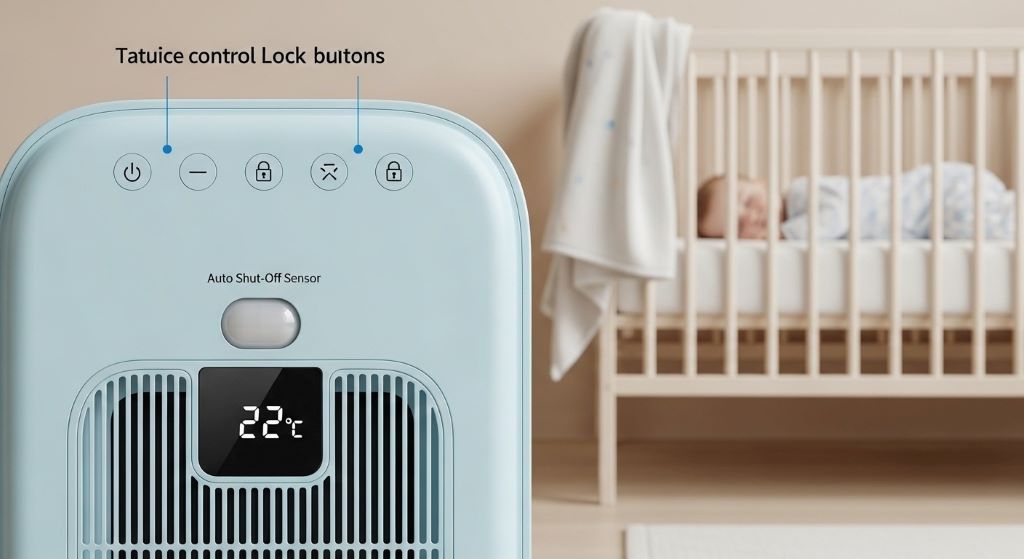
A child safety lock heater includes controls that can be disabled to prevent tampering. Babies and toddlers love pushing buttons and turning knobs. Without a locking mechanism, your child could accidentally change temperature settings, turn off the heater, or create unsafe conditions.
Control locks typically work through button combinations or special switches. Once activated, the lock prevents any changes to the heater’s settings. This feature ensures your carefully chosen temperature and safety settings remain unchanged even if your child plays with the controls.
Some advanced heaters include password-protected digital controls. While this level of security might seem excessive, it provides absolute assurance that settings won’t be altered. These models are particularly useful as your baby grows into a curious toddler who can reach higher surfaces.
The placement of controls also matters. Heaters with top-mounted or recessed controls are harder for small children to access compared to front-mounted buttons. Consider both the lock feature and control location when evaluating child safety lock heater options.
Remember that a control lock is not a substitute for proper supervision. However, it does provide an additional layer of protection during those moments when you step out of the room briefly or when your attention is temporarily focused elsewhere.
Additional Safety Features Worth Considering
Beyond the essential safety features already discussed, several other capabilities enhance heater safety around babies.
Overheat protection automatically shuts down the heater if internal temperatures exceed safe levels. This prevents the unit from overheating due to blocked air vents, mechanical failures, or other issues. Most quality heaters include this feature as standard equipment.
Timer functions allow you to program when the heater operates. You might set it to warm the nursery before bedtime and shut off after your baby falls asleep. This eliminates concerns about the heater running unnecessarily or operating while you’re not monitoring it.
Thermostat controls maintain consistent room temperatures by cycling the heater on and off automatically. This prevents overheating the room and reduces energy consumption. More importantly, it ensures your baby’s environment stays comfortable without requiring constant manual adjustments.
Cool-down features keep internal fans running briefly after you turn off the heating element. This disperses residual heat and helps the unit cool down faster. A cooler heater is safer to move or store and reduces burn risks if touched shortly after use.
Cord storage solutions help keep electrical cords organized and out of reach. Babies can pull on exposed cords, potentially toppling the heater or creating strangulation hazards. Heaters with built-in cord wraps or storage compartments minimize these risks.
Proper Placement and Use Guidelines
Even the safest heater can become dangerous if improperly positioned or used. Following proper placement guidelines is just as important as choosing the right features.
Maintain a safety zone of at least three feet around all sides of the heater. This distance prevents curtains, bedding, toys, and other flammable materials from coming into contact with the unit. In a nursery, this might require careful furniture arrangement to ensure adequate clearance.
Never place heaters on elevated surfaces like dressers or shelves. If a heater falls from height, tip-over protection may not engage quickly enough to prevent damage or injury. Always position heaters directly on the floor on stable, level surfaces.
Keep heaters away from your baby’s crib, changing table, and play areas. Even with cool-touch exterior features, maintaining distance adds an extra margin of safety. Position the heater where it effectively warms the room without being within your baby’s reach.
Avoid placing heaters near water sources such as humidifiers or in bathrooms. Water and electricity create serious hazards. If you need bathroom heating, choose models specifically rated for bathroom use with appropriate moisture protection.
Ensure adequate ventilation around the heater. Don’t push it against walls or into corners where airflow is restricted. Blocked vents can cause overheating and trigger safety shutoffs, reducing the heater’s effectiveness and potentially shortening its lifespan.
Comparing Popular Heater Brands for Child Safety
Several manufacturers have established reputations for producing heaters with comprehensive safety features. While specific models change frequently, understanding which brands prioritize safety helps narrow your options.
Dyson heaters are known for innovative safety designs including bladeless technology and cool-touch surfaces. Their heaters often include multiple safety features as standard equipment. However, they typically come with premium price tags that may not fit every budget.
DeLonghi specializes in oil-filled radiators that naturally offer cool-touch surfaces. Many of their models include tip-over protection, overheat protection, and child-safe designs. They offer good mid-range options balancing features and affordability.
Vornado produces ceramic and whole-room heaters with strong safety credentials. Their products typically include tip-over and overheat protection. They’re known for effective heating performance combined with safety features.
Lasko offers budget-friendly options without sacrificing essential safety features. Many of their heaters include tip-over protection, cool-touch exteriors, and overheat protection at accessible price points. This makes them popular choices for price-conscious parents.
Honeywell manufactures a wide range of heaters across different price points. Their product lines generally include good safety features, and they maintain strong quality control standards. You can find both basic and advanced models depending on your needs and budget.
Energy Efficiency and Operating Costs
While safety is paramount, operational costs matter for most families. Fortunately, many safety features don’t significantly impact energy efficiency.
Thermostatic controls actually improve efficiency by preventing excessive heating. The heater cycles on only when needed to maintain your target temperature. This reduces electricity consumption compared to running continuously at a fixed output.
Oil-filled radiators retain heat well, continuing to warm the room even after the heating element cycles off. This thermal inertia makes them more energy-efficient for maintaining consistent temperatures over extended periods.
Infrared heaters typically use less energy than convection or forced-air models. They heat objects directly rather than warming all the air in a room. For small spaces like nurseries, this efficiency advantage can lead to noticeable savings.
Timer functions help manage energy use by ensuring heaters only operate when needed. Programming the heater to run during specific hours prevents wasted electricity when the room is unoccupied or when other heating sources are adequate.
Consider the heater’s wattage in relation to room size. Using an oversized heater wastes energy, while an undersized unit runs constantly without achieving comfortable temperatures. Match heater capacity to your nursery’s square footage for optimal efficiency.
Maintenance and Long-Term Safety
Proper maintenance ensures your heater continues operating safely throughout its lifespan. Regular care prevents malfunctions that could compromise safety features.
Clean your heater regularly according to manufacturer instructions. Dust accumulation can block vents, causing overheating and reducing efficiency. Most heaters can be cleaned with a soft cloth and vacuum attachment. Always unplug the unit before cleaning.
Inspect cords and plugs periodically for damage. Frayed cords or cracked plugs create shock and fire hazards. If you notice any damage, stop using the heater immediately and contact the manufacturer about replacement parts or warranty service.
Test safety features occasionally to confirm they’re working properly. Carefully tip the heater to verify the tip-over protection engages. If the heater doesn’t shut off immediately, discontinue use and contact customer service.
Store heaters properly during off-season months. Keep them in dry locations away from moisture and extreme temperatures. Proper storage prevents damage that could compromise safety features when you bring the heater back into service.
Register your heater with the manufacturer to receive safety notices and recall information. Occasionally, manufacturers discover issues after products reach consumers. Registration ensures you’ll be notified of any safety concerns requiring attention.
Reading and Understanding Product Reviews
Customer reviews provide valuable real-world insights into heater performance and safety. However, learning to interpret reviews critically helps you separate useful information from misleading comments.
Focus on reviews mentioning specific safety features and how they performed in actual use. Comments about tip-over protection engaging properly or cool-touch surfaces staying genuinely cool are particularly valuable. These firsthand accounts verify manufacturer claims.
Pay attention to reviews from other parents using heaters in nurseries or children’s rooms. These reviewers likely share your priorities and concerns. Their experiences directly relate to your intended use case.
Be cautious of extremely positive or negative reviews without specific details. Generic praise or complaints may not be genuine. Look for reviews that include specific examples and detailed explanations of experiences.
Consider the volume and consistency of reviews. One person’s negative experience might be an isolated incident, but multiple reports of the same problem suggest a genuine issue. Look for patterns rather than focusing on individual outliers.
Check multiple sources including the manufacturer’s website, major retailers, and independent review sites. Different platforms sometimes attract different perspectives. A comprehensive view from multiple sources provides the most balanced picture.
Making Your Final Decision
After researching features, comparing brands, and reading reviews, you’re ready to make an informed choice. Several final considerations can help you select the best heater for your baby’s safety and comfort.
Create a priority list of must-have features versus nice-to-have additions. Tip-over protection and cool-touch exterior surfaces should top your essentials list. Control locks, timers, and other features can be weighted based on your specific situation and preferences.
Consider your budget realistically. The most expensive heater isn’t always necessary, but extreme budget models may lack crucial safety features. Mid-range options often provide excellent safety features without premium prices.
Think about your nursery’s specific characteristics. Room size, insulation quality, and existing heating systems all influence which heater type works best. A small, well-insulated nursery has different needs than a large, drafty room.
Evaluate whether you need portable flexibility or prefer permanent installation. Portable heaters offer versatility to move between rooms but require careful placement each time. Wall-mounted units eliminate tip-over concerns but lack flexibility.
Don’t rush the decision. Take time to compare several models meeting your safety requirements. The right heater will serve you for multiple seasons, making it worth the effort to choose carefully.
Conclusion
Choosing a heater with tip-over protection for your baby’s safety requires careful consideration of multiple factors. The right heater combines essential safety features like automatic shut-off with cool-touch exterior surfaces that prevent burns. Additionally, child safety lock heater options and proper certifications provide extra layers of protection.
Understanding different heater types helps you select one suited to nursery use. Oil-filled radiators, ceramic heaters, and infrared models each offer unique advantages. Proper placement, regular maintenance, and following manufacturer guidelines ensure safe operation throughout the heater’s lifetime.
While safety features are paramount, balancing these requirements with energy efficiency and practical considerations creates the ideal solution for your family. Taking time to research thoroughly, read reviews carefully, and compare options leads to confident decisions.
Remember that no heater eliminates the need for supervision and general safety awareness. However, choosing one with comprehensive safety features dramatically reduces risks. Your baby’s warmth and wellbeing depend on making informed choices that prioritize safety above all else.
By following the guidance in this article, you can create a comfortable, warm environment for your baby without compromising on safety. The right heater provides peace of mind along with cozy temperatures during cold months.
Frequently Asked Questions
At what age can I safely use a space heater in my baby’s room?
You can use a properly selected space heater with comprehensive safety features from birth. The key is choosing a model with tip-over protection, cool-touch surfaces, and overheat protection. Additionally, proper placement away from the crib and ensuring the heater is always supervised makes it safe for newborns and infants. Never leave a heater running in a baby’s room overnight without monitoring.
How far should a heater be from my baby’s crib?
Maintain a minimum distance of three feet between any heater and your baby’s crib. This safety zone prevents accidental contact and keeps bedding, blankets, and toys away from the heat source. Some experts recommend even greater distances of four to six feet for maximum safety. The specific distance may vary based on your heater type and room layout.
Are oil-filled radiators safer than ceramic heaters for nurseries?
Both can be safe when properly designed with appropriate safety features. Oil-filled radiators naturally offer cool-touch surfaces and silent operation, making them popular for nurseries. Ceramic heaters warm rooms faster but may produce fan noise. The safest choice depends on specific models rather than heater type alone. Always prioritize tip-over protection and cool-touch exteriors regardless of heating technology.
Can I use a space heater while my baby is sleeping?
Using a space heater during naps or nighttime sleep is possible with proper precautions. Choose a heater with automatic safety features including tip-over protection and overheat shut-off. Set the thermostat to maintain comfortable temperatures without overheating the room. Ideally, use a baby monitor to check on both your baby and the heater periodically. Some parents prefer warming the room before sleep and turning off the heater at bedtime.
What room temperature is safest for babies when using a heater?
Pediatricians recommend keeping nursery temperatures between 68 and 72 degrees Fahrenheit. Overheating increases SIDS risk, so slightly cooler is safer than too warm. Use a reliable room thermometer to monitor temperature rather than relying on how it feels to you. Dress your baby in appropriate layers for the room temperature and adjust the heater’s thermostat to maintain this safe range.
Related Topics:
What to Wear to Own Baby Shower: Tips and Ideas
The Ultimate Guide to Finding the Best Baby Lounger Store in San Diego, CA
No Comments