

17 Sep How to Dress for Different Surfing Conditions
You paddle out at dawn in board shorts and a rash guard, and the water feels like a warm bath. Two hours later the wind picks up, the sky clouds over, and you’re shivering so hard you can’t pop up cleanly. The wardrobe choices that worked at 8 a.m. stopped working by 10. Surf clothing isn’t about fashion — it’s about matching what you wear to water temperature, air temperature, wind, sun exposure, and session length. Get that match right and you stay in the water longer, surf better, and avoid the slow chill that ruins the rest of your day. If you’re building a warm-water kit, a detailed men’s quick dry long sleeve swim shirt review is a good starting point because that single garment does more heavy lifting than anything else in tropical and summer surf. This guide breaks down what to wear in each condition, why it works, and when it doesn’t.
Quick Answer
Match your surf clothing to the coldest temperature you’ll face during the entire session, not the temperature at the moment you paddle out. Warm water and warm air: boardshorts and a long-sleeve rash guard or quick-dry swim shirt. Warm water with wind or clouds: add a thin neoprene top or 1mm vest. Cool water: a 3/2mm full wetsuit. Cold water: 4/3mm or 5/4mm with boots, gloves, and a hood. The most common mistake is underdressing based on air temperature alone — water pulls heat out of your body roughly 20 to 25 times faster than air of the same temperature, so the ocean sets the floor for what you need.
Key Takeaways
- Dress for the coldest point of the session, including wind, cloud cover, and the drop in body temperature after 60–90 minutes of paddling.
- Water temperature matters far more than air temperature; a 78°F day with 62°F water still calls for a full wetsuit.
- In warm water, the two essentials are a long-sleeve quick-dry swim shirt for sun and rash protection and boardshorts or swim trunks that don’t chafe.
- Wind and evaporation are the most underestimated factors — they can turn a comfortable session cold within minutes even in tropical water.
- Fit matters as much as material: a loose rash guard or baggy top that balloons with water will chafe, sag, and cool you down faster than a snug one.
Start With Water Temperature, Not the Weather Report
The single most useful habit in surf clothing is checking water temperature before you check the air temperature. Air temperature tells you how the walk to the beach will feel. Water temperature tells you what you actually need to wear in the ocean.
Water conducts heat away from your body far more efficiently than air, which is why a 65°F pool feels dramatically colder than a 65°F room. Surfers feel this most acutely in the first 10 minutes of a session and again after about an hour, once the body’s core temperature starts to drift down.
Practical ranges to work from:
- 78°F and above (26°C+): Boardshorts or swim trunks, long-sleeve quick-dry shirt, optional hat.
- 72–78°F (22–26°C): Same as above, but consider a 1mm neoprene top if it’s windy or you plan a long session.
- 65–72°F (18–22°C): 2mm short-sleeve spring suit, or long-sleeve top with boardshorts if you run warm.
- 58–65°F (14–18°C): 3/2mm full wetsuit. Boots if the session runs past an hour.
- 50–58°F (10–14°C): 4/3mm full wetsuit with boots and gloves, hood in the colder end.
- Below 50°F (10°C): 5/4mm or 6/5mm with hood, gloves, and boots — no shortcuts work here.
These ranges assume average cold tolerance. People with more body fat, more cold-water experience, or higher natural cold tolerance can sometimes wear less; lean surfers and people who feel cold easily usually need the next step up. There’s no prize for underdressing.
Warm-Water Surfing: Shirt, Shorts, and Sun
In tropical water, the challenge flips entirely. You’re not fighting cold — you’re managing sun exposure, rash, and the friction of paddling for hours on end with your chest and arms pressed against a waxed board.
This is where a long-sleeve quick-dry swim shirt earns its place. It replaces sunscreen on the hardest-to-reach areas (upper back, shoulders, forearms), prevents board rash on the chest and armpits, and dries fast enough that you can wear it straight from the water to lunch without feeling weighed down.
What to look for in a warm-water top
Four things separate a shirt that works in the surf from one that just looks like it will:
- UPF rating: UPF 50+ blocks roughly 98% of UV radiation. Anything below UPF 30 will leave you exposed on multi-hour sessions.
- Snug but not compressive fit: A loose shirt floats up, traps water, and chafes the neck and underarms. It should feel like a second skin without restricting shoulder rotation.
- Flatlock or flat seams: Overlocked seams dig into shoulders and ribs after an hour of paddling. Flat seams don’t.
- Quick-dry fabric: Polyester and polyester-spandex blends dry fastest. Cotton is the worst possible choice — it stays wet, gets heavy, and accelerates cooling once the wind hits.
Boardshorts follow the same logic. Look for a drawstring waist that stays put when you duck dive, a length that doesn’t bunch behind your knees on the pop-up, and a fabric with at least some stretch. Long boardshorts that reach below the knee look relaxed on the beach but restrict hip movement in the water.
Cold Water: Layering and Wetsuit Basics
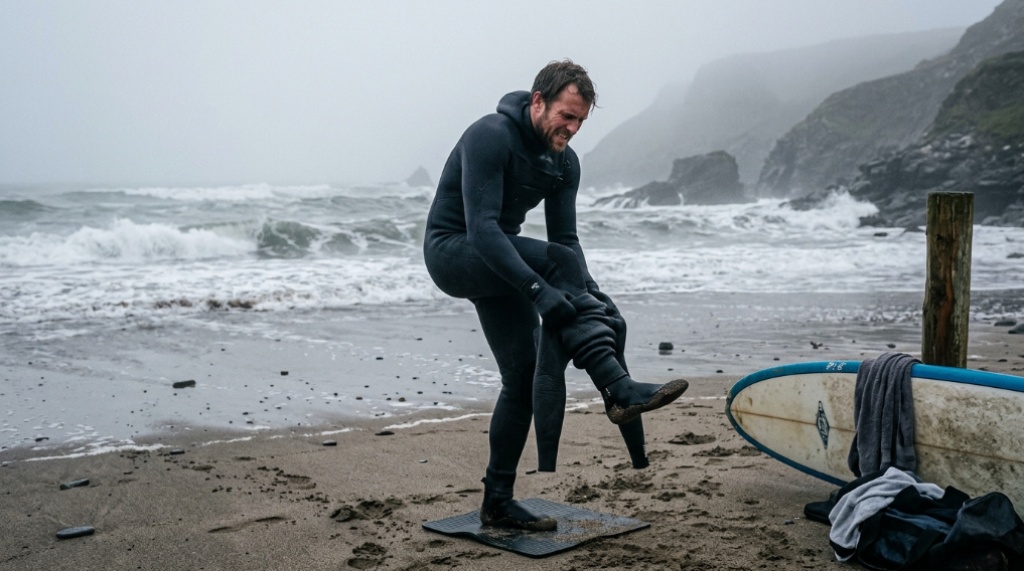
Once water drops below about 65°F, neoprene becomes non-negotiable. The key concept is that a wetsuit doesn’t keep you dry — it traps a thin layer of water against your skin and heats it to body temperature. That’s why fit is everything: a suit that’s too loose flushes cold water every time you duck dive, and a suit that’s too tight restricts breathing and paddling.
Thickness numbers like 3/2, 4/3, and 5/4 refer to millimeter thickness at the torso and limbs respectively. A 3/2mm has a 3mm torso panel and 2mm arms and legs. That’s the standard California and Portugal winter suit; 4/3mm and 5/4mm are for Northeast US, UK, and Pacific Northwest winters.
Accessory rules of thumb
- Boots: Add them when water drops below 60°F, or when you’re surfing rocky reef breaks where foot protection matters regardless of temperature.
- Gloves: Add them below 55°F. Neoprene gloves cost you paddle feel and grip strength, so don’t wear them until you actually need them.
- Hood: Add it below 52°F. Most heat loss in cold water happens through the head and neck; a hood does more for warmth than an extra millimeter of suit thickness.
Cold-water sessions also demand a rinse and dry routine. Salt and UV break down neoprene over time, so a freshwater rinse after every session will meaningfully extend suit life.
Wind, Clouds, and Session Length: The Factors Most Surfers Ignore
Two surfers paddle out in the same 74°F water. One wears a long-sleeve shirt and boardshorts and surfs for three hours. The other wears the same thing, gets hit by 15 mph onshore wind and cloud cover, and is shivering within 45 minutes. Same water, same clothing, completely different outcome, check out our guide on the latest surf fins pros are using in 2026 to upgrade your board setup before heading out.
Wind is the biggest wildcard in surf clothing decisions because it drives evaporative cooling. When your skin or shirt is wet and wind moves across it, heat leaves your body dramatically faster than in still air. A wet rash guard in a stiff breeze can feel colder than a dry one in the same conditions, which is why quick-dry materials matter in warm water and why a thin neoprene layer beats a cotton t-shirt in transitional temperatures.
Session length interacts with all of this. The first 30 minutes of any surf are the warmest because your core temperature is at its peak. By the 90-minute mark, most surfers have lost enough heat that conditions start to feel one category colder than they did at the paddle-out. If you plan to surf for more than two hours, dress one step warmer than you think you need.
A simple pre-session check
Before you decide what to wear, answer these four questions:
- What’s the water temperature right now?
- What’s the wind speed and direction?
- Is it sunny, cloudy, or raining?
- How long do I actually plan to stay out?
The coldest answer to any of those four wins. That’s your dress code.
Common Mistakes That Ruin a Session
Most uncomfortable surf sessions trace back to one of a handful of recurring errors rather than to bad gear.
- Dressing for the beach, not the ocean: A warm sunny parking lot can make 60°F water feel irrelevant — until you’re in it.
- Wearing cotton: Cotton t-shirts and hoodies are the worst possible surf tops. They soak up water, get heavy, and cool you aggressively once the wind picks up.
- Size drift in wetsuits: A suit that fit two seasons ago and has been stored folded can stretch or stiffen. If it flushes water on duck dives, it’s time to replace it.
- Ignoring the transition back to shore: Walking back across cold sand or rocks in bare feet after a long session drains heat fast. Boots or a quick-dry changing mat help more than people expect.
- Sunscreen-only sun protection: Sunscreen washes and sweats off within 60–90 minutes. A UPF shirt gives full-session coverage without reapplication.
How to Build a Small, Versatile Surf Wardrobe
You don’t need a closet full of gear. A functional surf kit for most regions can be built around four or five garments that cover the full temperature range you actually surf in.
| Item | Typical Water Temp Range | Primary Job |
|---|---|---|
| Boardshorts | 70°F+ | Movement, chafe protection |
| Long-sleeve quick-dry swim shirt (UPF 50+) | 65°F+ | Sun protection, rash prevention |
| 1–2mm neoprene top or vest | 62–75°F | Wind and transitional warmth |
| 3/2mm full wetsuit | 55–68°F | Core warmth for temperate water |
| 4/3mm or 5/4mm with accessories | Below 55°F | Full cold-water protection |
If you surf in multiple climates through the year, the swim shirt and boardshorts pull double duty across almost every warm category, while the wetsuit does the heavy lifting in cold. That’s why starting with a reliable long-sleeve quick-dry shirt is usually the smartest first purchase.
Frequently Asked Questions
Can I wear a regular t-shirt surfing instead of a swim shirt?
You can, but you shouldn’t. Cotton holds water, gets heavy, chafes under the arms, and cools your body quickly in wind. A quick-dry swim shirt or rash guard is lighter, dries faster, and provides real UPF protection.
How do I know if I need a wetsuit or just a rash guard?
Use water temperature as the deciding factor. Above roughly 70–72°F, a rash guard and boardshorts are usually enough. Below that, especially with wind, most surfers want at least a 1–2mm neoprene top, and below about 65°F a full wetsuit becomes the practical choice.
Do long-sleeve swim shirts actually block UV rays?
Shirts rated UPF 50+ block roughly 98% of UV radiation and keep working the entire session without reapplication. Regular clothing varies widely in UV protection, and wet fabric often blocks less than dry fabric.
What’s the biggest mistake people make dressing for surf?
Dressing for air temperature instead of water temperature. A 78°F sunny day with 60°F water still requires a wetsuit, and surfers regularly get cold because the beach felt warm at the paddle-out.
Should I wear booties in warm water?
Only if you’re surfing reef, rock, or sharp-shell breaks where foot protection matters. In pure sand-bottom warm water, booties aren’t necessary and can make your feet feel hotter than you’d like.
How often should a wetsuit be replaced?
With a proper freshwater rinse and shade drying after each session, a decent wetsuit typically lasts two to four seasons of regular use. Replace it once seams leak, the neoprene feels stiff, or you notice flushing on duck dives.
Conclusion
The rule that solves almost every surf-clothing decision is simple: dress for the coldest point of the session, not the warmest moment on the beach. Check water temperature, wind, cloud cover, and how long you plan to stay out, then dress one notch warmer than your instinct says. Warm-water surfers should build around a long-sleeve quick-dry shirt and boardshorts; cold-water surfers need a properly fitted wetsuit with the right accessories. Get those two setups dialed in and you’ll spend your sessions surfing instead of shivering.
No Comments