
19 Sep Flood-Damaged Car Checklist: How to Spot Water Damage Before Buying
Key Takeaways
- Flood damage hides in smells, stains, and rust before it hides in electronics.
- Always run the VIN through history databases before you inspect in person.
- Check the spare tire well, seat rails, and door pockets for mud and water lines.
- Foggy headlights and corroded connectors are classic water evidence.
- Saltwater flooding destroys cars far faster than freshwater flooding.
My brother-in-law Dave found a Honda Accord that looked like a gift. Low miles, spotless paint, and a price $4,000 below every similar listing. The seller met him in a mall parking lot on a bright Saturday. Dave was ready to pay on the spot. Luckily, I tagged along, because I have one rule about used cars. Always open the trunk first.
We lifted the spare tire cover and found dried mud packed deep inside the wheel well. Then Dave leaned close to the taillight and spotted a faint brown water line inside the lens. The cabin smelled faintly of mildew under a heavy vanilla air freshener. We walked away, and two weeks later, the listing vanished. The car was real, however, its past was floating.
That afternoon became my flood damaged car checklist. This guide shares it, step by step. You will learn where water hides, which smells matter, and how to confirm everything with paperwork.
Why Flood Cars Hit the Market After Every Storm
Flood cars follow hurricanes the way mosquitoes follow rain. When a major storm strikes a coastal city, thousands of cars soak overnight in parking garages and streets. Insurers declare many of them total losses. However, thousands more are bought at salvage auctions, cleaned quickly, and resold far from the damage zone.
The numbers are staggering. According to Carfax, more than 325,000 flood-damaged vehicles were estimated back on American roads after Hurricane Harvey in 2017. Similar waves follow nearly every major coastal storm. NHTSA also warns buyers directly, because flood damage can corrupt wiring, sensors, and safety systems months or years later. You can read the agency’s guidance on its NHTSA flood-damaged vehicles page.
Why do these cars keep selling? Because flood damage is easy to hide and slow to appear. A detailing session dries the carpets. An air freshener covers the smell. The electronics often fail later, after the seller is gone.
The costs land on ordinary buyers. According to AAA, about one in three American drivers cannot cover an unexpected repair without going into debt. Flooded wiring failures can easily exceed $2,000. Therefore, spotting water evidence on day one is the only reliable defense.
Step 1: Run the VIN and Paperwork First
Start your flood damaged car checklist before you leave the house. Every vehicle carries a 17-character VIN, and honest sellers share it freely. Ask for the VIN, then run it through a history report and the federal title database.
Check these sources in order:
- A paid history report from Carfax or AutoCheck for flood records
- The free federal NMVTIS database at vehiclehistory.gov for title brands
- The NHTSA recall lookup for open safety issues
- The title itself for brands like flood, salvage, or water damage
Pay close attention to geography. A car registered in a landlocked state, with a title that just arrived from a hurricane state, deserves hard questions. Sellers sometimes move flood cars across state lines to weaken or erase brands. Experts call this title washing, and it works because branding rules differ by state.
Additionally, compare the title history with the seller’s story. A one-owner car should show one long ownership line, not three states in twelve months. Paperwork cannot catch every flood car, because uninsured vehicles and cash sales leave no records. Therefore, treat the documents as your first filter, and let the physical inspection deliver the verdict.
Step 2: Trust Your Nose and Check the Cabin
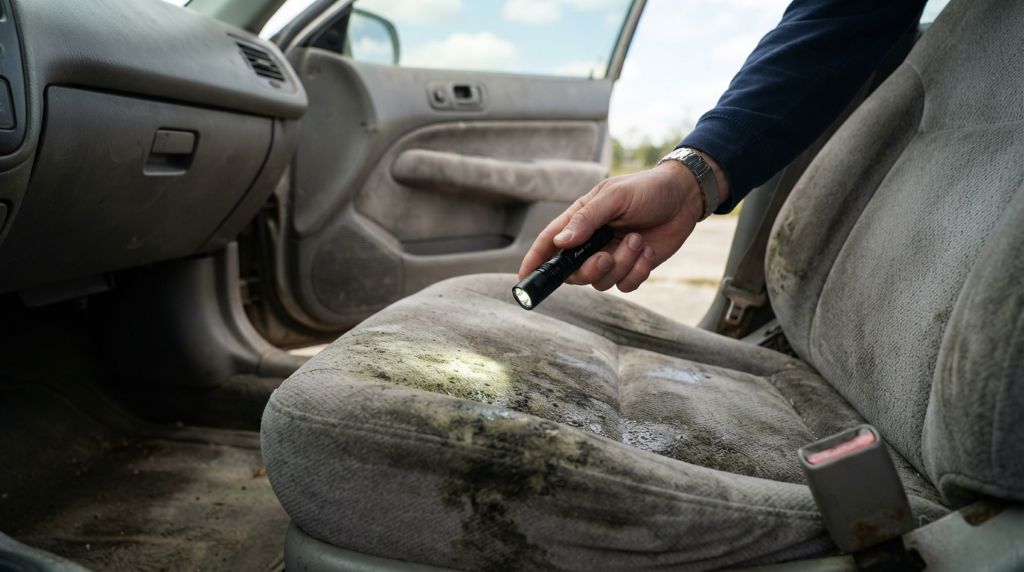
Your nose is the cheapest flood detector ever invented. Water-soaked interiors develop a musty, mildew smell that never fully leaves. Step inside, close the doors, and breathe deeply for ten seconds. A damp basement smell means you can likely stop the inspection right there.
However, sellers know this trick. Therefore, a strong air freshener is itself a warning sign. Multiple fresheners, especially new ones, often mask mildew or smoke. Ask the seller to let the cabin sit unopened, then smell it again cold.
Next, hunt for physical evidence with your hands:
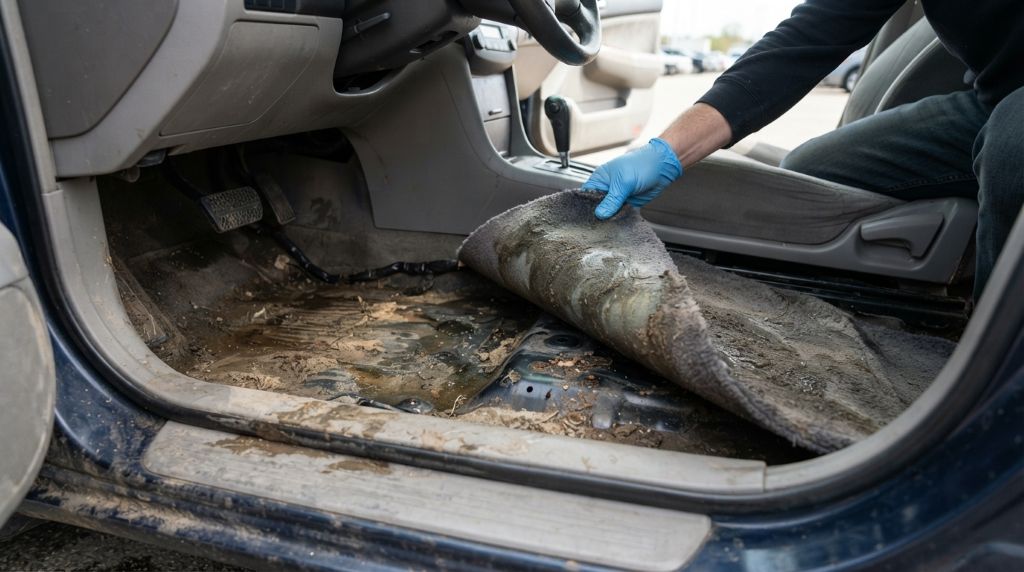
- Lift every floor mat and press the carpet for dampness or stiffness
- Look for brown water stains on carpet, headliner, and door pockets
- Open the trunk and inspect the spare tire well for trapped mud
- Check seat rails, seat springs, and mounting bolts for rust
- Slide seats fully forward and backward, then look underneath
- Inspect the glove box and under-dash areas for staining
The spare tire well rarely lies. Detailers clean visible carpets, however, few dig into the trunk floor. Deep mud or a tide line inside that well ended Dave’s Accord deal. Meanwhile, rust on seat bolts tells you water sat deep inside the cabin for days. Therefore, spend ten careful minutes below your knees, because that is where flood evidence survives.
Step 3: Test Every Electrical Feature
Water and wiring are permanent enemies. Corrosion creeps along connectors for years, and failures appear one module at a time. Therefore, electrical chaos is the long-term cost of flood damage, and your job is finding early symptoms.
Turn the ignition to the on position and watch the dashboard. Every warning light should glow, then clear. An airbag light that never lights up may be unplugged deliberately, which is a serious red flag. Then test everything that uses power:
- All windows, locks, mirrors, and seat adjustments
- Air conditioning and heater at full power
- Radio, touchscreen, backup camera, and charging ports
- Wipers, washer jets, horn, and every exterior light
- Heated seats and steering wheel, if equipped
Watch for flickering screens, random resets, and features that work only sometimes. Additionally, look at the exterior lights closely. Fog inside a headlight or taillight housing is classic evidence, and a water line inside a lens, like the one in Dave’s Accord, is close to proof.
Check the fuse box as well. Pull the cover and look for a muddy residue or corrosion on the fuses. Water often reaches fuse boxes under the dash. One dead switch is a cheap fix. However, several flaky features together suggest a wet harness, and rewiring a car costs more than most loans. Consequently, count every failure before you negotiate.
Step 4: Look Under the Hood and Under the Car
The engine bay and undercarriage finish your inspection, because water leaves marks there too. Open the hood and work through these checks:
- Milky or chocolate-colored oil, which means water entered the engine
- Water lines or sediment inside the air filter box
- Corrosion on electrical connectors and relay terminals
- Rust on brackets, bolts, and unusually deep in the engine bay
- Green or white crust on the battery terminals and grounds
Milky oil is the most serious finding on this list. Water inside an engine destroys bearings quickly, and the damage is permanent. Therefore, pull the dipstick before the seller warms the car.
Then crouch down with a flashlight and inspect below. Look at the frame rails, exhaust components, and suspension parts. Surface rust is normal on older cars. However, heavy, flaking rust on parts that should stay dry suggests long soaking. Check the drain holes along the doors and rocker panels as well, because mud clogging them points to deep water.
Finally, remember the saltwater rule. Ocean storm surge carries salt deep into every connector, and salt keeps corroding for years. Freshwater flooding is bad. Saltwater flooding is usually fatal to a car’s long-term reliability. Therefore, ask where the car lived during any recent coastal storm, and match the answer to the title history.
Your Complete Flood Damaged Car Checklist
Bring this list on every used-car inspection, and work through it in order:
- Run the VIN through NMVTIS and a paid history report.
- Compare title geography with the seller’s story.
- Smell the cold cabin for mildew, and question heavy air fresheners.
- Lift all mats and press carpets for dampness.
- Open the trunk and inspect the spare tire well for mud.
- Check seat rails, bolts, and under-seat areas for rust.
- Confirm every dashboard light glows, then clears.
- Test every switch, screen, light, and motor twice.
- Look for fog or water lines inside all exterior lenses.
- Pull the oil dipstick and check the air box for water marks.
- Inspect connectors, the fuse box, and the undercarriage with a flashlight.
- Ask an independent mechanic to lift and inspect the car.
The mechanic step costs $150 to $250, and it closes the gaps that eyes and noses miss. Lifts reveal rust, residue, and wiring damage hidden under panels. Therefore, treat the inspection as mandatory, not optional, whenever any earlier step raises doubt.
One more habit multiplies your protection. Photograph everything during the inspection, especially suspicious findings. Photos create a record for negotiations, and they protect you if a seller later disputes the story.
Final Thoughts
Flood cars survive in the market because buyers fall for shine and price. However, water always leaves evidence. It smells like a basement, stains the carpets, muddies the trunk well, fogs the lenses, and corrodes the wires. If the carpets or upholstery show signs of water damage, knowing how do you clean cloth car seats like a pro? can also help you understand what to look for when inspecting the interior. Now you know exactly where each clue hides.
Remember Dave’s Accord. Three findings, in one trunk and one lens, saved him $4,000 and years of electrical grief. The same clues are waiting in almost every flood car on any lot.
Therefore, use this flood damaged car checklist before your next purchase, and never skip the mechanic inspection when something feels off.
Have you ever spotted water damage during a used-car inspection, or learned about it the hard way? Share your story in the comments below. Additionally, share this guide with a friend shopping after storm season, because flood cars travel far from the coast.
Frequently Asked Questions
Can a flood-damaged car ever be fixed properly?
Minor freshwater exposure can be dried and repaired. Saltwater or deep soaking usually causes permanent electrical damage.
Will a history report always show flood damage?
No. Uninsured vehicles and title washing can hide flood records. Therefore, always inspect the car physically.
Does car insurance cover flood damage?
Yes, comprehensive coverage typically pays for flood damage. Liability-only policies do not.
Is freshwater flood damage less serious than saltwater?
Yes. Freshwater dries out eventually, however, saltwater keeps corroding wiring for years.
What is the single best check for flood damage?
Open the trunk spare tire well and smell the cold cabin. Mud and mildew rarely lie.
No Comments