
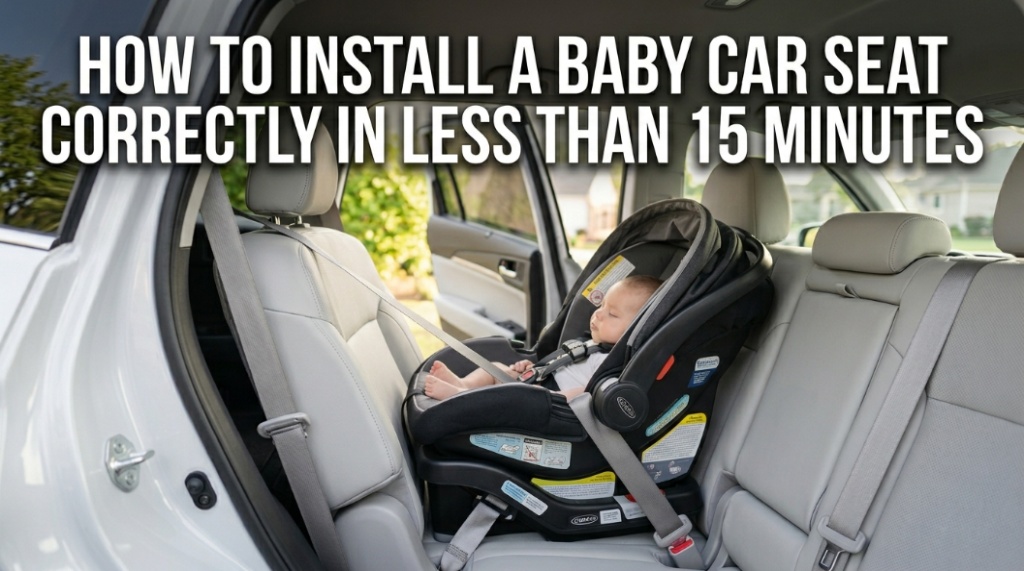
25 May How to Install a Baby Car Seat Correctly in Less Than 15 Minutes
Most parents spend more time adjusting a stroller canopy than securing the one device that could save their child’s life in a crash. The truth is simple: proper installation of a baby car seat means the seat moves less than one inch at the belt path, is installed at the correct recline angle, and is secured using either the latch system or seat belt installation method—not both unless the manufacturer specifically allows it. Yet studies have repeatedly found that many child restraints are used incorrectly, increasing the risk of injury during a collision. Knowing how to install a baby car seat correctly takes only a few minutes, but doing it right can make a life-changing difference.
What Is the Correct Way to Install a Baby Car Seat?
The correct way to install a baby car seat is to secure it tightly using either the vehicle seat belt or the latch system, follow the manufacturer’s instructions, and ensure the seat moves less than one inch side-to-side or front-to-back at the belt path.
A properly installed car seat protects infants and young children by distributing crash forces across the strongest parts of their bodies. Organizations such as the American Academy of Pediatrics and the National Highway Traffic Safety Administration recommend following both the vehicle owner’s manual and the car seat manual because requirements vary by model.
Many new parents focus on buying the right seat but overlook installation details. Before starting, it can help to review expert recommendations about choosing the right seat for your state and vehicle size in this comprehensive guide to safe baby car seat options and regulations.
Regardless of brand, every installation should meet these requirements:
- Seat secured tightly
- Correct recline angle for the child’s age
- Harness positioned correctly
- Chest clip at armpit level
- No excessive movement at the belt path
- Rear-facing position for infants and young toddlers
What Should You Do Before Installing a Baby Car Seat?
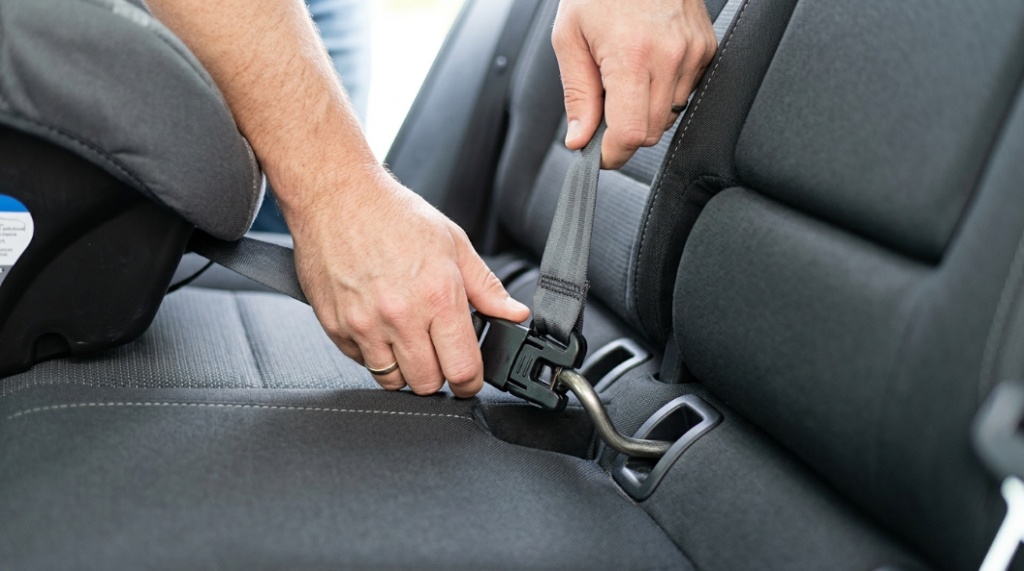
Before installation, read both manuals, identify your vehicle’s anchoring points, and verify the seat is appropriate for your child’s height and weight.
Preparation eliminates most installation mistakes. Modern vehicles have different seat configurations, anchor locations, and belt-locking mechanisms. Spending two minutes reviewing instructions can save significant frustration.
Checklist Before Installation
- Locate the car seat manual
- Check the vehicle owner’s manual
- Find lower anchors if using LATCH
- Verify weight limits
- Confirm seat expiration date
- Choose the safest seating position
- Remove bulky accessories not approved by the manufacturer
The center rear seat is often considered the safest location when a secure installation is possible. However, if achieving a tight fit is easier in an outboard position, a properly installed seat is safer than a poorly installed center-seat setup.
How Do You Install a Baby Car Seat Using the LATCH System?
The latch system allows parents to secure a car seat directly to built-in vehicle anchors without using the seat belt.
LATCH stands for Lower Anchors and Tethers for Children. Most vehicles manufactured after 2002 include these anchor points.
Step-by-Step LATCH Installation
- Place the car seat on the vehicle seat.
- Locate the lower anchors between the seat cushions.
- Attach both LATCH connectors securely.
- Apply pressure to the car seat using your hand or knee.
- Pull the adjustment strap until tight.
- Check movement at the belt path.
- Verify the recline angle indicator.
After installation, grasp the seat near the belt path and attempt to move it. If it shifts more than one inch, tighten the system further.
Interestingly, understanding how vehicles function and how components interact can help parents appreciate the importance of secure restraint systems, much like diagnosing common vehicle issues discussed in this guide on modern vehicle security systems and car mechanics.
When Should You Stop Using LATCH?
You should stop using lower anchors once the combined child and seat weight exceeds the manufacturer’s specified limit.
Many parents overlook this requirement. Once the limit is reached, switch to a seat belt installation if permitted by the manufacturer.
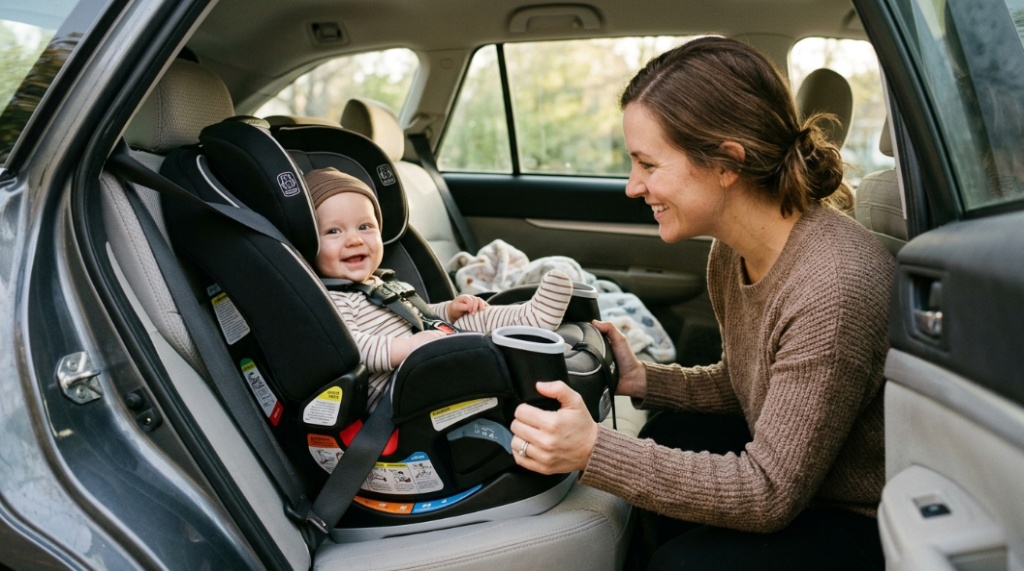
How Do You Install a Baby Car Seat With a Seat Belt?
Seat belt installation is equally safe when performed correctly and is often necessary for larger children or specific seating positions.
Many child passenger safety technicians actually prefer teaching parents seat belt installation because every vehicle has seat belts, while anchor configurations vary.
Step-by-Step Seat Belt Installation
- Position the car seat on the vehicle seat.
- Thread the seat belt through the correct belt path.
- Buckle the seat belt completely.
- Lock the seat belt according to vehicle instructions.
- Apply pressure to compress the vehicle seat cushion.
- Pull excess slack from the belt.
- Verify less than one inch of movement.
Most modern vehicles feature locking retractors. Pull the belt fully out and slowly feed it back to activate the locking mechanism.
Is Seat Belt Installation as Safe as LATCH?
Yes. When installed correctly, seat belt installation is just as safe as the latch system.
Crash testing demonstrates that correct installation—not the attachment method—is the most important safety factor.
Which Is Better: LATCH System or Seat Belt Installation?
Neither method is inherently safer. The best choice is whichever method allows the tightest and most secure installation according to manufacturer instructions.
| Feature | LATCH System | Seat Belt Installation |
|---|---|---|
| Ease of Use | Usually easier | Requires learning belt locking |
| Availability | Limited anchor locations | Every seating position |
| Weight Restrictions | Yes | Usually no lower-anchor limits |
| Travel Compatibility | Varies by vehicle | Universal |
| Safety Level | Equal when installed properly | Equal when installed properly |
Parents should focus on achieving a secure fit rather than worrying about which system is theoretically superior.
How Can You Check if a Baby Car Seat Is Installed Correctly?
A correctly installed car seat should move less than one inch at the belt path and maintain the recommended recline angle.
This quick test takes seconds and can prevent dangerous mistakes.
The One-Inch Test
- Grip the seat at the belt path
- Push side-to-side
- Push front-to-back
- Movement must remain under one inch
Other Verification Points
- Harness straps lie flat
- Chest clip sits at armpit level
- No twisted straps
- Correct recline angle
- Anchor attachments fully connected
- Seat belt locked when applicable
Some parents also schedule a free inspection with a certified Child Passenger Safety Technician for additional peace of mind.
What Are the Most Common Baby Car Seat Installation Mistakes?
The most common mistakes include loose installation, incorrect harness placement, improper recline angle, and misuse of attachment systems.
Even experienced parents occasionally make errors when switching vehicles or upgrading seats.
Top Installation Errors
- Using both LATCH and seat belt simultaneously without approval
- Loose connectors or belts
- Incorrect belt routing
- Harness straps positioned improperly
- Chest clip too low
- Forward-facing too early
- Ignoring weight limits
- Using expired car seats
Vehicle-related issues often distract drivers from safety priorities. While unusual automotive symptoms such as engine vibration and shaking problems deserve attention, child restraint security should always be checked before every trip.
How Long Does It Take to Install a Baby Car Seat Correctly?
Most parents can complete a proper installation in less than 15 minutes after becoming familiar with the process.
The first installation may take 20–30 minutes while reading instructions. Subsequent installations are typically much faster.
Typical Time Breakdown
| Task | Average Time |
|---|---|
| Review instructions | 3–5 minutes |
| Position seat | 1 minute |
| Secure anchors or belt | 3–5 minutes |
| Adjust recline | 1–2 minutes |
| Final safety check | 1–2 minutes |
Practice improves speed significantly while maintaining safety standards.
Should Babies Ride Rear-Facing After Installation?
Yes. Babies and toddlers should remain rear-facing until they reach the maximum height or weight limit specified by the car seat manufacturer.
Rear-facing seats provide superior protection for the head, neck, and spine during frontal crashes. Research consistently shows reduced injury risk for children riding rear-facing compared with those turned forward-facing too soon.
Benefits of Rear-Facing Travel
- Better neck support
- Improved spinal protection
- Enhanced crash-force distribution
- Reduced risk of serious injury
- Recommended by pediatric safety experts
Always check manufacturer guidelines rather than relying solely on age-based milestones.
Conclusion: What Is the Fastest Safe Way to Install a Baby Car Seat?
The fastest safe method is the one you fully understand and can execute correctly every time. Whether using the latch system or seat belt installation, success comes down to following instructions, achieving a tight fit, maintaining the correct recline angle, and verifying less than one inch of movement.
Remember the essentials: read both manuals, choose one approved attachment method, perform the one-inch movement test, and keep children rear-facing as long as recommended. A properly installed car seat can dramatically improve crash protection and provide confidence every time you drive.
For parents researching additional child passenger safety recommendations, seat selection guidance, and state-specific regulations, reviewing trusted resources such as this detailed baby car seat safety guide can help ensure every journey starts with the highest level of protection.
Take five minutes today to inspect your current installation. That quick check could be the most important safety upgrade you make for your child.
Frequently Asked Questions About Baby Car Seat Installation
Can I use both the LATCH system and seat belt installation together?
Only if both the vehicle and car seat manufacturer specifically allow it. Most manufacturers instruct parents to use one approved installation method at a time.
How tight should a baby car seat be?
A correctly installed car seat should move less than one inch side-to-side or front-to-back when tested at the belt path.
What is the safest position for a baby car seat?
The center rear seat is often considered safest when a secure installation is possible. However, any rear seating position with a proper installation is safe.
How often should I check my car seat installation?
Check the installation before long trips, after removing the seat, after vehicle maintenance, and periodically during regular use.
Can I install an infant car seat without the base?
Many infant seats allow carrier-only installation using a vehicle seat belt. Always follow the manufacturer’s instructions for your specific model.
When should I switch from rear-facing to forward-facing?
Switch only after your child reaches the maximum rear-facing height or weight limit listed by the car seat manufacturer.
Do I need a professional car seat inspection?
While not mandatory, a certified Child Passenger Safety Technician can verify your installation and help identify mistakes that may otherwise go unnoticed.
No Comments