

23 Apr How to Choose the Best Travel Backpack for Airplane That Fits Under Any Seat
Packing for a flight used to mean choosing between a large checked bag or a bulky carry-on. Today, smart travelers know there is a better way. A well-chosen travel backpack can hold everything you need for a short trip or a long journey — and still slide neatly under the seat in front of you.
However, not every backpack is made for airplane travel. Size, shape, and design all matter. The wrong bag can cause stress at the gate, slow down boarding, and even cost you extra fees. Therefore, it pays to choose carefully before your next trip.
This guide will walk you through everything you need to know. From size limits to must-have features, you will learn exactly how to pick the best travel backpack for any airplane seat.
Why the Right Backpack Makes All the Difference
Think about your last flight. Did you struggle to find overhead bin space? Did you have to check your bag at the gate unexpectedly? These situations are stressful and avoidable.
A backpack designed for under-seat storage solves these problems instantly. You keep your bag close throughout the flight. You can access your items whenever you need them. Additionally, you skip the baggage claim line when you land, which saves precious time.
The right bag also reduces physical stress. A well-fitted backpack distributes weight evenly. It does not strain your back or shoulders the way a heavy tote or poorly designed bag does. Furthermore, a compact backpack is easier to carry through airports, train stations, and busy streets when you reach your destination.
Understanding Airline Size Restrictions
Every airline has its own rules about personal item dimensions. This is the most important thing to understand before buying any bag. Typically, personal items must fit within a range of about 18 x 14 x 8 inches. However, these numbers vary by carrier.
Budget airlines tend to be the strictest. Some have very specific size requirements and may measure your bag at the gate. Therefore, always check the rules for the specific airline you fly most often. Look up their personal item size policy on their website before making a purchase.
An under seat backpack that is too wide or too tall will not slide under most airplane seats. Even if it squeezes under one seat, it may not fit under another. Choosing a bag on the smaller end of the acceptable size range gives you the most flexibility across different airlines and aircraft types.
Key Dimensions to Look for in an Under-Seat Backpack
When shopping for a travel backpack meant for under-seat storage, focus on these measurements:
- Height: Aim for 17 to 18 inches maximum.
- Width: Stay at or under 12 to 13 inches.
- Depth: Keep it at 7 to 8 inches or less.
Bags within these dimensions typically slide under most economy-class seats without any issues. However, airplane seats vary from aircraft to aircraft. Middle seats on older planes sometimes have less under-seat space than window or aisle seats. Therefore, erring on the side of a slightly smaller bag is always smart.
Capacity is another number worth knowing. Most under-seat travel backpacks range from 20 to 35 liters. For a short trip of one to three days, a 25-liter bag is usually plenty. For longer trips where you plan to pack light, a 30 to 35-liter bag gives you more flexibility.
The Most Important Features to Look For
A Structured Shape That Holds Its Form
A bag that collapses when full is frustrating and hard to pack well. Look for a backpack with a structured frame or semi-rigid panels. This keeps the bag looking neat and makes it easier to slide in and out from under the seat.
Structured bags also protect your belongings better. Electronics, glasses, and toiletries stay safer when the bag holds its shape around them. Additionally, a structured bag is easier to carry by its top handle, which is useful in tight airport spaces.
Smart Compartments and Organization
A good travel backpack should have multiple compartments. This allows you to separate clean clothes from toiletries, electronics from snacks, and travel documents from everything else.
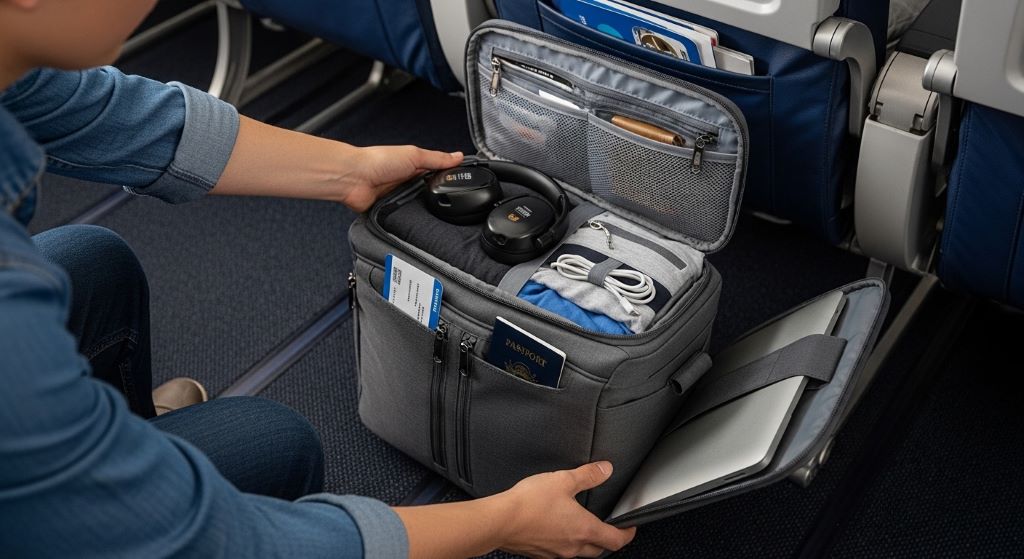
Look for a dedicated laptop sleeve or tablet compartment. This is especially important if you plan to work during your flight. A quick-access front pocket is also very handy. You can store your passport, boarding pass, and phone in a spot that is easy to reach during security checks and boarding.
Comfortable and Padded Straps
You will carry this bag through airports, sometimes for long distances. Padded shoulder straps make a huge difference. Mesh backing on the straps improves airflow and reduces sweating. Some bags also include a sternum strap, which helps distribute weight more evenly across your body.
A padded back panel is another feature worth seeking out. It protects your back and adds comfort during longer walks between terminals. However, keep in mind that extra padding does add a small amount of weight. Balance comfort with the need for a lightweight overall bag.
Water Resistance
Airports and travel come with unexpected weather. A water-resistant exterior protects your belongings from rain, spills, and wet overhead bins. Look for bags made from ripstop nylon or polyester with a durable water repellent (DWR) coating.
Water resistance is not the same as waterproofing. Therefore, if you plan to travel in heavy rain, consider adding a rain cover. Most quality travel backpacks include one, or they are available as inexpensive add-ons.
Easy Access During Security
Airport security requires you to remove your laptop and liquids quickly. A bag with a clamshell opening — meaning it opens flat like a suitcase — makes this much easier. You can lay the bag down on the scanner belt and access everything without digging through the contents.
Additionally, look for exterior pockets that open from the top. This design lets you reach in quickly without opening the entire bag. Small details like these save time and reduce stress at busy security checkpoints.
Choosing the Right Material
The material of your backpack affects its weight, durability, and appearance. There are a few common options to consider.
Nylon is lightweight and durable. It resists abrasion well and dries quickly after getting wet. Most mid-range and high-end travel backpacks use nylon for these reasons.
Polyester is similar to nylon but slightly heavier. It is often less expensive, making it a good choice for budget-conscious travelers. However, it may not last as long under heavy daily use.
Canvas is heavier but gives a stylish, classic look. It is a good option if you want a bag that doubles as an everyday carry. However, canvas is less water-resistant than synthetic materials, so it may need more care in wet conditions.
Recycled materials are becoming more common in travel bags. Many brands now use recycled plastic bottles or reclaimed fabrics. These materials often perform just as well as traditional options and are a more sustainable choice.
Style Considerations for the Modern Traveler
Function is essential, but style matters too. You want a bag that looks good in the airport, in the city, and at your destination. Fortunately, many travel backpacks now combine practical features with sleek, modern design.
Neutral colors like black, navy, gray, and olive green are versatile. They match most outfits and show dirt less easily than lighter colors. Additionally, these tones look professional, which is ideal if you travel for business.
Some travelers prefer a bag that does not look like a typical travel backpack. Slim, streamlined designs that resemble everyday backpacks blend in better and are less likely to draw attention. This can be helpful in certain destinations where looking like a tourist is something you want to avoid.
What to Pack in Your Under-Seat Backpack
Knowing what to pack helps you choose the right size bag. For a standard flight, your under-seat backpack should hold:
- A change of clothes or two for short trips
- Travel-size toiletries in a clear zip bag for security
- Your laptop or tablet and charger
- Headphones and entertainment
- Snacks and a reusable water bottle
- Travel documents, wallet, and phone
- A light jacket or scarf for the cold cabin
Everything on this list fits comfortably in a 25 to 30-liter backpack. If you tend to pack more, choose a bag closer to 35 liters. However, be mindful that a fuller bag is heavier and harder to compress if the airline asks you to fit it into a sizing frame.
How to Test a Backpack Before You Fly
If possible, try the bag in person before buying it. Pack it with your typical travel items and walk around the store. Notice how the straps feel, how easy the zippers are to open, and whether the bag holds its shape.
At home, test whether it fits under a chair or low table. This gives you a rough idea of whether it will slide under an airplane seat. Additionally, check that you can lift it comfortably when it is fully packed. If it feels too heavy empty, it will certainly be too heavy full.
Read online reviews from other travelers, especially those who have tested the bag on specific airlines. Real-world experiences give you information that product descriptions cannot. Look for reviews that mention how the bag performed under actual airline seats.
Recommended Features Checklist
Before you buy, run through this quick checklist:
- Dimensions fit within your airline’s personal item size limit
- Capacity between 25 and 35 liters
- Structured frame or semi-rigid panels
- Multiple compartments with a dedicated laptop sleeve
- Padded, adjustable shoulder straps
- Water-resistant material
- Clamshell or full-zip opening for easy security screening
- Top carry handle
- Sternum strap for added support
If a bag checks most of these boxes, it is likely a strong choice. No single bag will be perfect for every traveler. However, a bag that covers the basics well will serve you reliably on most journeys.
Conclusion
Choosing the best travel backpack for airplane travel comes down to three things: size, features, and comfort. Start by knowing the size limits for the airlines you fly most often. Then look for a bag with smart organization, durable materials, and comfortable straps.
An under seat backpack that fits neatly beneath the seat in front of you gives you freedom throughout your flight. You can access your belongings easily, skip the overhead bin scramble, and move through the airport with confidence. An airline approved bag also eliminates the risk of surprise fees or gate-check stress.
Invest time in choosing the right bag before your next trip. Consider your typical travel needs, your preferred packing style, and the types of trips you take most often. The perfect backpack is out there — and once you find it, every journey becomes smoother, easier, and far more enjoyable.
Frequently Asked Questions
What is the standard size for an under-seat backpack on most airlines?
Most airlines allow personal items up to 18 x 14 x 8 inches. However, budget carriers can be stricter. Always check your specific airline’s personal item policy before purchasing a bag. Choosing a bag slightly smaller than the maximum gives you the most flexibility across different aircraft.
Can I bring both a carry-on and an under-seat backpack on a flight?
Yes, most airlines allow one carry-on bag for the overhead bin and one personal item that fits under the seat. However, policies vary by airline and ticket type. Basic economy fares on some carriers only allow a personal item, with no overhead carry-on included. Always verify your fare rules before packing.
Is an airline approved bag the same as a personal item?
Yes. An airline approved bag simply means a bag that meets the airline’s size requirements for a personal item. It must fit within the dimensions the carrier specifies. Any bag that meets those requirements is considered approved for cabin travel as a personal item.
How do I know if my backpack will fit under an airplane seat?
Check the bag’s dimensions against your airline’s personal item size limit. As a practical test at home, try sliding the bag under a coffee table or low chair. You can also look for reviews from travelers who mention using the bag on specific aircraft types. Bags under 18 x 12 x 8 inches generally fit under most economy seats.
What is the ideal capacity for a travel backpack used as a personal item?
For most travelers, a backpack between 25 and 30 liters is ideal. This size holds enough for a weekend trip while staying compact enough to slide easily under an airplane seat. If you pack very light, a 20-liter bag may be sufficient. For longer trips where you want to carry a bit more, a 35-liter bag is the upper limit for comfortable under-seat storage.
Related Topics:
How to Travel by Car with a Cat Litter Box
No Comments