
27 Sep How to Check a Fishing Scale Before Weighing a Large Catch
Key Takeaways
- Checking your scale before use prevents inaccurate tournament results.
- Battery levels directly affect display accuracy and reliability.
- A quick calibration test confirms your scale reads true weights.
- Inspecting hooks and attachments prevents dropped fish during weighing.
- A pre-trip checklist saves time and stress on the water.
Weighing a large catch demands more than just hanging it on a hook. However, as the angling specialists at https://crazyfishinggear.com/ often warn, skipping a pre-check frequently leads to wrong or unreliable numbers. This guide explains how to check your fishing scale correctly. You will trust your readings on your most important catches.
Why Pre-Checking Your Scale Matters
Large catches often represent personal bests or tournament-winning fish. Therefore, accuracy matters more during these high-stakes moments. A quick check beforehand prevents costly, embarrassing mistakes.
Scales can drift out of calibration without any obvious warning signs. A slightly off reading might go unnoticed during casual fishing. However, this same error could disqualify a tournament entry entirely.
Battery issues also affect accuracy more than many anglers realize. A weak battery sometimes still powers the display partially. As a result, anglers may trust a reading that is actually unreliable.
According to the National Oceanic and Atmospheric Administration, accurate measurement practices support better data quality across fisheries research and monitoring. While this applies mainly to scientific work, the same care benefits individual anglers. Careful habits with personal gear improve your own record-keeping too.
Checking your scale takes only a few minutes before any trip. This small investment of time protects your credibility and your records. Therefore, make pre-checking a standard part of your fishing routine.
Inspecting Your Scale’s Physical Condition
Before testing accuracy, examine your scale for visible damage or wear. Physical problems often signal deeper functional issues.
- Check the display screen for cracks or moisture damage
- Inspect the hook or attachment point for bending or rust
- Look for corrosion around battery compartments or buttons
- Test all buttons for smooth, responsive function
- Confirm the housing shows no cracks or water intrusion
A cracked display can hide or distort important weight numbers. Even small cracks sometimes let moisture reach internal electronics. Therefore, replace or repair any scale with visible screen damage.
The hook or attachment point carries the entire weight of your catch. A bent or rusted hook risks bending further or snapping suddenly. This failure could drop a large fish and cause real injury.
Corrosion around buttons or battery compartments signals past moisture exposure. This damage often leads to inconsistent readings or complete failure. Address any corrosion before relying on the scale for an important catch.
Testing the Battery and Power System
A reliable power source keeps your scale accurate throughout your fishing day. Follow these steps to confirm your battery works properly.
- Turn on the scale and check the battery indicator icon.
- Replace batteries immediately if the indicator shows low power.
- Confirm the display stays bright and steady after turning on.
- Watch for flickering or dimming during the first few seconds.
- Carry spare batteries in a dry, protected container.
- Test the scale again after installing fresh batteries.
Flickering displays often indicate batteries nearing the end of their life. This symptom appears before a complete power failure typically occurs. Therefore, treat flickering as an early warning sign, not a minor annoyance.
Carrying spare batteries prevents a ruined trip from unexpected power loss. Store them in a waterproof container within your tackle bag. This small addition costs little space but offers real peace of mind.
Testing after battery replacement confirms the fix actually solved the problem. Some issues stem from corroded contacts rather than the batteries themselves. A quick retest saves confusion later during an important catch.
Confirming Zero and Tare Function
Your scale must read exactly zero before any accurate weighing begins. Follow these steps to confirm this basic function works correctly.
- Turn on the scale with nothing attached to the hook.
- Confirm the display reads zero without any items present.
- Attach your weigh bag, sling, or gripper to the hook.
- Press the tare button to zero out the container’s weight.
- Confirm the display returns to zero after taring.
- Repeat this test twice to confirm consistent results.
A display that will not return to zero signals a deeper problem. This issue often points toward internal sensor damage or drift. Therefore, do not trust a scale that fails this basic test.
Testing the tare function twice builds extra confidence before big catches. Inconsistent results between tests suggest an unreliable internal mechanism. Address this issue before your next important weigh-in attempt.
This simple zero check takes less than a minute to complete. However, it catches many problems before they affect your actual results. Make this test a habit before every serious fishing trip.
Calibrating Against a Known Weight
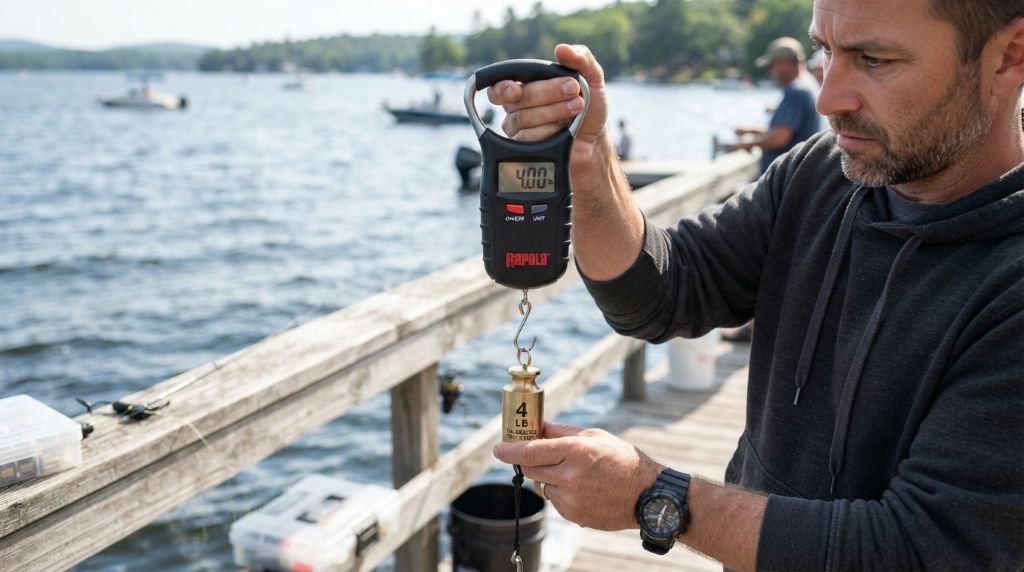
Calibration testing confirms your scale measures true, accurate weights. Follow these steps using an object of known weight.
- Gather an object with a clearly labeled weight, like a dumbbell.
- Turn on the scale and confirm it reads zero first.
- Attach the known weight object to the scale’s hook.
- Lift the scale steadily until the object hangs freely.
- Compare the displayed number to the object’s labeled weight.
- Adjust calibration settings if your scale allows manual changes.
Dumbbell plates work well for this test due to their clear labeling. Most home gyms or sporting goods stores carry various weight options. Choose a weight similar to your expected catch size for best accuracy.
Manual calibration settings vary widely between different scale models. Check your owner’s manual for specific adjustment instructions. Some scales require a special button sequence to enter calibration mode.
If your scale lacks manual calibration, note any consistent measurement offset. Some anglers simply add or subtract this known difference by hand. This workaround helps until you can replace or repair the scale.
Preparing Your Weighing Setup for a Big Catch
Beyond the scale itself, your entire setup needs a final check. This step ensures everything works together smoothly.
- Confirm your weigh bag or sling has no rips or tears
- Check that clips or attachments move smoothly and lock securely
- Test the scale’s maximum weight capacity against your target species
- Find a stable, sheltered spot away from wind for weighing
- Have a helper ready to assist with steadying large fish
Weigh bags and slings experience wear just like any other gear. A small rip can grow suddenly under the stress of a heavy fish. Therefore, inspect this equipment as carefully as the scale itself.
Weight capacity matters more for large catches than casual fishing trips. Exceeding your scale’s rated limit risks damage or inaccurate readings. Always confirm your scale handles your target species comfortably.
Wind remains one of the biggest challenges during large fish weigh-ins. A swinging fish confuses sensors and produces unreliable numbers. Therefore, seek shelter or use your body to block wind whenever possible.
Conclusion
Checking your fishing scale before weighing a large catch takes only a few minutes. Inspect the physical condition, test the battery, and confirm the zero and tare functions work. Calibrate against a known weight and prepare your full weighing setup beforehand. These steps protect your records and your credibility on important catches. If you’re also preparing your gear for surf fishing, knowing whether cheap surf casting rods are worth it can help you balance performance and budget before your next trip.
A few minutes of preparation makes the difference between confidence and doubt. Do not wait until a personal best is on the line to check your gear. Test your scale today, so you are ready when that big catch finally comes.
Frequently Asked Questions
How do I know if my scale needs new batteries?
Watch for a low battery indicator or a flickering display. Replace batteries immediately if you notice either sign.
What object works best for calibration testing?
A labeled dumbbell plate works well for most calibration tests. Choose a weight close to your expected catch size.
Why won’t my scale return to zero after taring?
This often signals internal sensor damage or drift over time. Consider replacing the scale if this problem persists.
Should I check my scale before every fishing trip?
Checking before every trip is ideal, especially for tournaments. At minimum, check it before targeting large or record fish.
What should I do if my scale fails a pre-check?
Replace batteries or attempt calibration adjustments first. Replace the scale entirely if problems continue after these steps.
No Comments