

16 Feb How to Compare Stand Mixer Power for Bread and Cake Baking
Selecting the right stand mixer can make or break your baking experience. Whether you’re kneading artisan bread or whipping up delicate cakes, understanding motor capabilities ensures you invest in equipment that meets your needs. This guide breaks down everything you need to know about mixer power in 2026.
Why Motor Power Matters in Stand Mixers
Many home bakers focus solely on bowl size or attachments when shopping for mixers. However, the motor determines whether your machine can handle demanding recipes. A weak motor struggles with thick batters and eventually burns out. Conversely, an overpowered motor adds unnecessary cost for simple tasks.
The right power level depends on what you bake most often. Occasional cookie makers need different specifications than daily bread bakers. Therefore, understanding your baking habits helps narrow down options effectively.
Understanding Wattage in Stand Mixers
Wattage represents the electrical power a mixer consumes. Most home models range from 250 to 1000 watts. Higher numbers suggest more power, yet this measurement alone doesn’t tell the complete story.
A 500-watt mixer might outperform a 700-watt competitor if designed more efficiently. Manufacturers sometimes inflate wattage figures without improving actual performance. Additionally, peak wattage differs from sustained operating power. Marketing materials often highlight peak numbers that motors only reach briefly under stress.
Consider wattage as one factor among several. It provides a starting point for comparisons but requires context from other specifications. Look for consistent power delivery rather than impressive peak numbers.
The Importance of Torque in Mixing Performance
While wattage measures electrical input, torque measures rotational force at the mixing attachment. This distinction matters significantly for bakers. A motor might consume substantial electricity yet deliver weak turning power at the beater.
High torque allows mixers to push through resistance without slowing down. Think of it like vehicle engines. A truck needs high torque to pull heavy loads, even if it doesn’t have the highest horsepower. Similarly, mixers need strong rotational force to handle thick mixtures.
Unfortunately, many manufacturers don’t list torque specifications. When available, measured in Newton-meters, higher values indicate better performance with challenging recipes. However, you can often infer torque from how companies describe their products. Terms like “direct-drive motor” or “commercial-grade” suggest robust torque delivery.
Comparing Wattage vs Torque for Your Needs
These two measurements serve different purposes in evaluating mixers. Understanding their relationship helps you make informed decisions.
Wattage indicates overall power consumption and potential. It sets the ceiling for what a motor can accomplish. Lower wattage motors physically cannot sustain high performance over time. They heat up quickly and risk damage under strain.
Meanwhile, torque determines how effectively that power translates into mixing force. Superior engineering can deliver impressive torque from moderate wattage. Conversely, poorly designed motors waste electricity without generating useful work.
For home bakers, focusing too heavily on either metric creates problems. A high-wattage, low-torque mixer sounds impressive but disappoints with bread dough. A high-torque, low-wattage model might excel at thick batters yet lack the sustained power for large batches.
The sweet spot varies by your specific needs. Casual bakers who make cakes and cookies occasionally can succeed with 300-500 watts and moderate torque. Regular bread bakers need 500-800 watts with strong torque specifications. Professional-level home bakers should consider 800+ watts with commercial-grade torque delivery.
What Heavy Dough Mixing Really Requires
Bread dough presents the ultimate test for stand mixer motors. The combination of flour, water, and gluten development creates substantial resistance. As dough kneads, it becomes increasingly elastic and challenging to manipulate.
Different bread types demand varying power levels. Soft sandwich bread with enriched dough proves relatively manageable. Conversely, bagel dough or pizza dough with low hydration ratios creates significant strain. Whole grain breads add another complexity layer with their dense texture.
When evaluating mixers for heavy dough mixing, consider several factors beyond basic power ratings. First, examine the transmission system. Direct-drive motors connect straight to the attachment hub, delivering maximum force. Belt-driven systems lose efficiency through friction and wear over time.
Second, assess cooling mechanisms. Motors generate heat during operation. Quality mixers incorporate ventilation and thermal protection to prevent overheating. Without adequate cooling, even powerful motors shut down mid-knead or suffer shortened lifespans.
Third, investigate the gear system. Metal gears outlast plastic alternatives, especially under heavy loads. Some manufacturers use hybrid systems with metal primary gears and plastic secondary components. All-metal construction provides the best durability for frequent bread bakers.
Bowl capacity also influences dough mixing requirements. Larger batches exponentially increase motor strain. A mixer that handles two loaves easily might struggle with four. Therefore, match your typical batch sizes to rated capacities with some buffer room.
Speed Settings and Control Systems
Power means little without proper control. Modern stand mixers offer various speed options, typically ranging from 6 to 12 settings. More speeds provide finer control over mixing intensity.
Low speeds prove essential for combining dry ingredients without creating dust clouds. Medium speeds work well for most cake batters and cookie doughs. High speeds excel at whipping cream or egg whites into peaks.
For bread dough, you primarily use lower to medium speeds. Excessive speed generates heat that affects yeast activity and gluten development. However, having powerful low-speed performance matters more than maximum speed capability.
Soft-start features help prevent ingredient splatter when beginning to mix. The motor gradually ramps up to the selected speed rather than starting at full power immediately. This refinement makes mixers more practical for everyday use.
Electronic speed controls maintain consistent power under varying loads. As dough thickens, mechanical speed controls slow down. Electronic systems compensate automatically, ensuring steady mixing throughout the process. This technology particularly benefits bread bakers who need reliable performance.
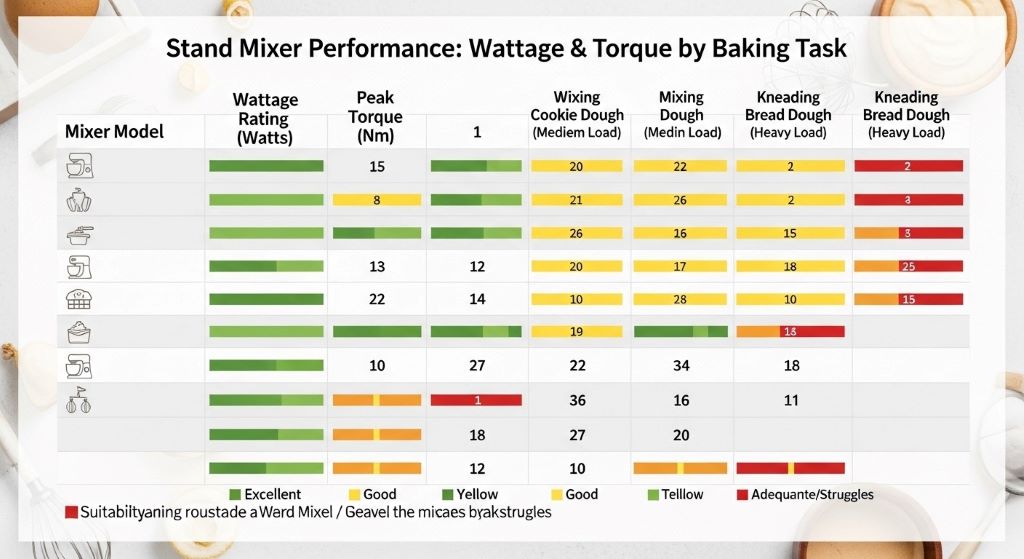
Evaluating Motor Strength Through Design Features
Since manufacturers don’t always provide comprehensive specifications, examining design elements reveals motor quality indirectly. Several indicators suggest robust motor strength.
Weight serves as a reliable proxy for motor quality. Heavier mixers typically contain more substantial motors with better components. A mixer under 10 pounds likely has a lighter-duty motor. Models between 15-25 pounds usually feature mid-range motors suitable for regular home baking. Units exceeding 25 pounds often incorporate commercial-grade motors built for daily intensive use.
Housing materials also indicate motor quality. All-metal construction dissipates heat better than plastic housings. Die-cast metal bodies specifically suggest durable internal components. Manufacturers investing in quality exteriors usually don’t cut corners on motors.
Warranty length reflects manufacturer confidence in motor durability. Basic mixers come with one-year warranties. Better models offer three to five years. Premium mixers sometimes include ten-year warranties or even lifetime coverage on motors. Longer warranties generally correlate with stronger, more reliable motors.
Brand reputation matters when evaluating motor strength. Companies specializing in stand mixers for decades have refined their motor designs through generations of products. Newer brands might offer attractive prices but lack proven track records for motor longevity.
Testing Motor Performance Before Purchase
Whenever possible, experience mixers firsthand before buying. Many kitchen stores maintain demonstration models. Running these units provides valuable insights beyond specifications.
Listen to motor sounds at various speeds. Smooth, consistent humming indicates quality construction. Grinding, clicking, or irregular noises suggest poor engineering or manufacturing defects. Additionally, observe whether the mixer head wobbles or vibrates excessively during operation. Stable performance demonstrates solid motor mounting and balanced design.
If testing isn’t possible, research extensively through reviews. Focus on feedback from users who bake similar items to your interests. Bread bakers’ experiences matter more than cake bakers’ opinions if you primarily make bread. Look for comments about motor performance specifically, rather than just overall satisfaction.
Pay attention to complaints about motors overheating, slowing down under load, or failing prematurely. These issues indicate insufficient power for heavy dough mixing. Conversely, consistent praise for motor reliability and performance under challenging conditions suggests a well-designed unit.
Matching Motor Power to Your Baking Style
Your typical recipes should guide motor power selection. Different baking styles stress motors in unique ways.
Cake and cupcake bakers need moderate power for creaming butter and sugar, then mixing batters. These tasks don’t require extreme force. A 300-500 watt mixer with decent torque handles cake baking excellently. Focus on features like variable speeds and large bowl capacity rather than maximum power.
Cookie bakers face slightly more demanding conditions. Dense cookie doughs with lots of mix-ins create moderate resistance. A 400-600 watt mixer provides ample power for regular cookie baking. Ensure the motor can sustain operation for several minutes without overheating.
Bread enthusiasts should prioritize motor strength. Kneading develops gluten through sustained mechanical work. Look for 500-800 watts minimum with strong torque delivery. Consider whether you’ll knead one loaf or multiple loaves simultaneously. Larger batches require proportionally more power.
Pizza makers need similar capabilities to bread bakers. However, pizza dough often has lower hydration, creating denser consistency. Err toward more powerful motors if you frequently make pizza. The extra strength prevents strain and extends motor life.
Pastry bakers working with laminated doughs like croissants or puff pastry have unique needs. While these doughs don’t require kneading, they’re cold and firm during mixing. Cold butter integration demands good power and torque. A 500-700 watt mixer handles pastry work reliably.
Multi-purpose bakers who create various items need balanced capabilities. A 600-800 watt mixer with solid torque serves most needs well. This range handles everything from delicate meringues to challenging bread doughs without excessive cost or bulk.
Energy Efficiency and Long-Term Costs
More powerful motors consume more electricity during operation. However, efficient motors accomplish tasks faster, potentially offsetting higher power draw. Consider total energy consumption rather than just wattage ratings.
An efficient 500-watt motor might complete mixing in five minutes, using less total energy than a 400-watt motor requiring eight minutes for the same task. Additionally, motors running near their capacity generate more heat and waste energy. A properly sized motor operates efficiently without straining.
Motor longevity also affects long-term costs. Replacing burned-out motors or entire mixers proves expensive. Investing in adequate power upfront prevents premature failures. Calculate total ownership costs over expected product life rather than just initial purchase price.
Quality motors maintain performance for decades with proper care. Budget motors often degrade within a few years, requiring replacement. The initial savings disappears when you buy a second or third mixer. Therefore, choosing appropriate motor strength represents wise financial planning.
Common Motor-Related Problems and Solutions
Understanding potential issues helps you maintain mixer performance and recognize when problems arise.
Overheating represents the most common motor problem. If your mixer stops mid-operation or feels extremely hot, the motor has likely reached thermal limits. Allow it to cool completely before resuming. Frequent overheating indicates you’re exceeding the motor’s capabilities or the cooling system has failed.
Slowing under load suggests insufficient power for the task. The motor lacks the strength to maintain speed against resistance. Either reduce batch sizes, choose easier recipes, or upgrade to a more powerful mixer.
Strange noises during operation might indicate bearing wear, gear problems, or foreign objects in the mechanism. Stop using the mixer immediately and have it serviced. Continuing operation could cause more serious damage.
Smoking or burning smells signal severe motor distress. Unplug the mixer instantly. The motor likely has insulation damage or is severely overheating. Professional repair or replacement becomes necessary.
Maintenance Tips for Motor Longevity
Proper care extends motor life significantly. Follow these practices to protect your investment.
Never exceed recommended capacities. Manufacturers test their products extensively and establish realistic limits. Pushing beyond these boundaries causes premature wear and potential failure.
Allow adequate cooling between batches. Even powerful motors need breaks during intensive use. Let the mixer rest for 15-20 minutes between heavy dough batches.
Keep the mixer clean, especially ventilation openings. Flour dust clogs cooling vents, causing overheating. Wipe down the mixer after each use and periodically clean vents with compressed air.
Lubricate moving parts according to manufacturer guidelines. Some mixers require periodic maintenance while others run maintenance-free. Check your manual for specific recommendations.
Store the mixer properly when not in use. Cover it to prevent dust accumulation. Ensure storage locations remain dry to prevent moisture damage to electrical components.
Future-Proofing Your Stand Mixer Investment
Technology advances continuously, yet stand mixer fundamentals remain consistent. Motors will always need adequate power for mixing tasks. However, consider emerging trends when purchasing.
Smart features are appearing in premium mixers. Connected models track mixing time, suggest speeds for recipes, and alert you to maintenance needs. While not essential, these features might enhance your baking experience.
Brushless motors deliver higher efficiency and longer lifespans than traditional brushed motors. They cost more initially but offer better long-term value. As prices decrease, brushless technology will likely become standard.
Modular designs allow component replacement and upgrades. Some manufacturers now offer motors that can be serviced or upgraded separately from the mixer body. This approach extends product life and reduces waste.
Energy efficiency standards continue tightening. Future models will likely deliver similar performance with less power consumption. However, current efficient motors already perform admirably.
Making Your Final Decision
Choosing a stand mixer involves balancing numerous factors. Start by honestly assessing your baking frequency and recipe types. This foundation guides all other decisions.
Create a budget that accounts for long-term value rather than just initial cost. Quality motors justify higher prices through years of reliable service.
Read independent reviews from trusted sources. Professional testing reveals real-world performance that marketing materials might obscure.
Consider warranty coverage as insurance against motor failure. Strong warranties indicate manufacturer confidence in their motors.
Test mixers in person when possible. Hands-on experience provides insights that specifications cannot convey.
Remember that no single mixer perfectly suits everyone. The best choice matches your specific needs, budget, and baking aspirations.
Conclusion
Comparing stand mixer power requires looking beyond simple wattage numbers. Understanding the relationship between wattage vs torque helps you evaluate true performance capabilities. When shopping for heavy dough mixing capabilities, examine motor construction, cooling systems, and gear quality alongside power ratings. This motor strength guide provides the framework for making informed decisions based on your unique baking needs. Whether you’re an occasional cake baker or a daily bread enthusiast, matching motor capabilities to your requirements ensures satisfying results and long-lasting performance. Take time to research thoroughly, test when possible, and invest in adequate power for your baking ambitions.
Frequently Asked Questions
What wattage do I need for making bread dough regularly?
For regular bread baking, choose a mixer with at least 500-600 watts combined with good torque specifications. This power level handles standard bread recipes with two to four loaves per batch. If you frequently make dense whole grain breads or large batches, consider 700-800 watts for comfortable operation without motor strain.
Is torque more important than wattage for stand mixers?
Both measurements matter for different reasons. Wattage indicates overall power potential and sustained operation capability. Torque determines how effectively that power translates into mixing force. For heavy dough, high torque proves more critical than maximum wattage. However, adequate wattage ensures the motor can deliver that torque consistently without overheating.
How can I tell if a mixer motor is strong enough without torque specifications?
When torque isn’t listed, examine indirect indicators. Check the mixer’s weight, with heavier models typically having stronger motors. Review the warranty length, as longer coverage suggests durable construction. Read user reviews specifically mentioning bread dough performance. Look for all-metal gear systems and direct-drive motors. These features correlate with strong torque delivery.
Why does my mixer slow down when kneading dough?
Slowing under load indicates the motor lacks sufficient power for the task. The dough’s resistance exceeds what the motor can maintain at the selected speed. This happens when the motor wattage is too low, torque is insufficient, or you’re exceeding recommended batch sizes. Consider reducing your dough quantity or upgrading to a more powerful mixer.
Do higher-wattage mixers last longer than lower-wattage models?
Not necessarily. Motor longevity depends on build quality, how well the power matches your usage, and proper maintenance. An appropriately powered 500-watt mixer used within its limits often outlasts a poorly made 800-watt model pushed to extremes. Choose adequate wattage for your needs, then focus on construction quality and brand reputation for durability.
Related Topics:
The best cheap kitchen robot
CucinaPro Cavatelli Maker Review: Is It Worth Buying?
No Comments